Diagnosis: Looking and listening
What the patient shows without knowing it. 8 activities, about 12 minutes.
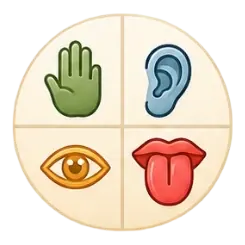
Four examinations, one patient
四診 sì zhěn
Looking, listening and smelling, asking, and palpating. Each examination collects data the others cannot, and what counts is that they agree. Observation starts the moment the patient walks through the door.
- Looking
- spirit, colour, posture and tongue
- Listening and smelling
- voice, breathing, cough and odours
- Asking
- what only the patient knows
- Palpating
- pulse and painful areas
Common mistake: Starting to observe when you ask them to stick out the tongue. By then you have missed how they walk, how they speak and what colour they are.
Spirit and facial colour
First comes the spirit (shen): bright eyes, a lively gaze and clear answers say the background is holding up. Then the facial colour, read just like the tongue's: it gives the nature of the picture.
- Pale or white
- deficiency or cold
- Red
- heat
- Only the cheekbones red in the afternoon
- heat from Yin deficiency
- Sallow yellow, no shine
- weak Spleen or damp
- Bluish or greenish
- cold, pain or stagnation
Common mistake: Reading the colour under warm artificial light, or in someone who has just come in flushed from the street.
Sort each face by what its colour suggests.
- Pale and dull, with tiredness
- Red all over, with thirst and fever
- Cheekbones red only in the afternoon
- Bluish lips with fixed pain
- Sallow and dull, no appetite
- Greenish complexion during colicky pain
Two patients with the same pattern: one has bright eyes and answers quickly; the other has a dull gaze. What changes?
Listening and smelling
In Chinese, listening and smelling share one word, and both happen while the patient tells their story. Voice and breathing close the strength axis; odour helps with cold or heat.
- Strong voice, noisy breathing
- excess
- Weak voice that fades
- qi deficiency
- Strong or foul odour
- heat
- Hardly any odour
- cold or deficiency
Common mistake: Attending only to what the patient says and not to how they say it. A voice that fades at the end of every sentence is already a finding.
Match each observation with what it suggests.

Level complete!
Recorded. That standard is yours now.
Did you enjoy it? In the app you save your progress, review what you forget and unlock the 1072 exercises.
Study content. The exercises describe concepts of Traditional Chinese Medicine; they are not medical advice.