Microsystems: What a projection is
A map, not an X-ray. 6 activities, about 10 minutes.
A map of the body on a small area
Acupuncture works on points spread across the whole body. A microsystem does the same on a single area — ear, hand, scalp, abdomen or face — onto which the whole body is drawn in miniature.
- Microsystem
- A small area with a map of the whole body drawn on it
- Correspondence
- This area of the map stands for this part of the body
- Point
- A spot on the map that is pressed, covered with a taped seed or needled
- School or standard
- Who drew the map: each one draws it its own way
Common mistake: Taking the drawing for a window into the body. It is a convention for finding your way, not what lies under the skin.
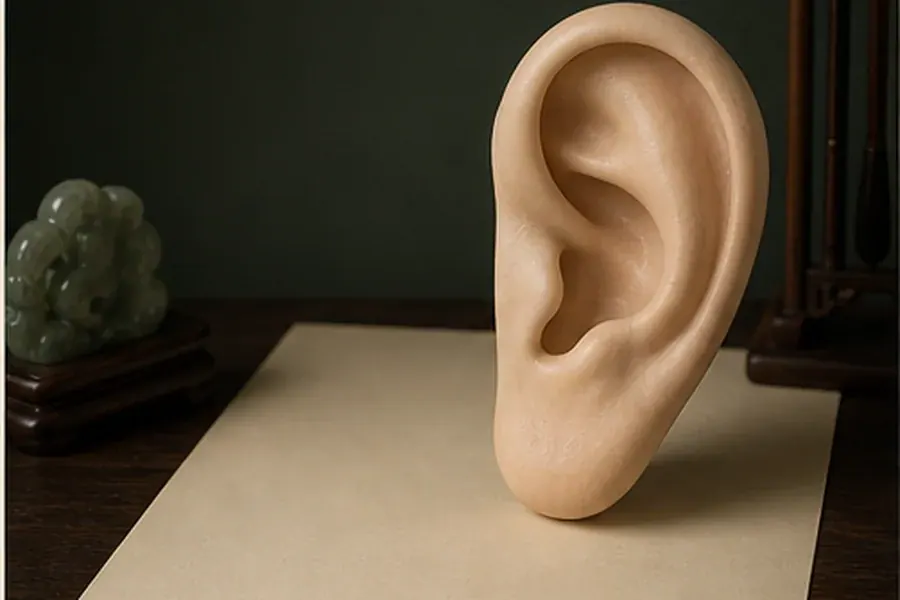
The whole body, in a small area
耳穴 Ěr Xué
A microsystem orders a region of the body as if the whole were projected onto it. It is a system of correspondences built for locating and remembering, not a description of what lies anatomically beneath.
- Somatotopic projection
- An order of correspondences over a region
- The ear's “inverted fetus”
- A head-down baby drawn on the ear
- The abdomen's sacred turtle
- A turtle drawn around the navel
- What actually is underneath
- Cartilage, vessels, nerves: that is the real anatomy
Common mistake: Confusing the mnemonic with the map. The inverted fetus helps you remember; points are studied by anatomy and by the specific standard in use.
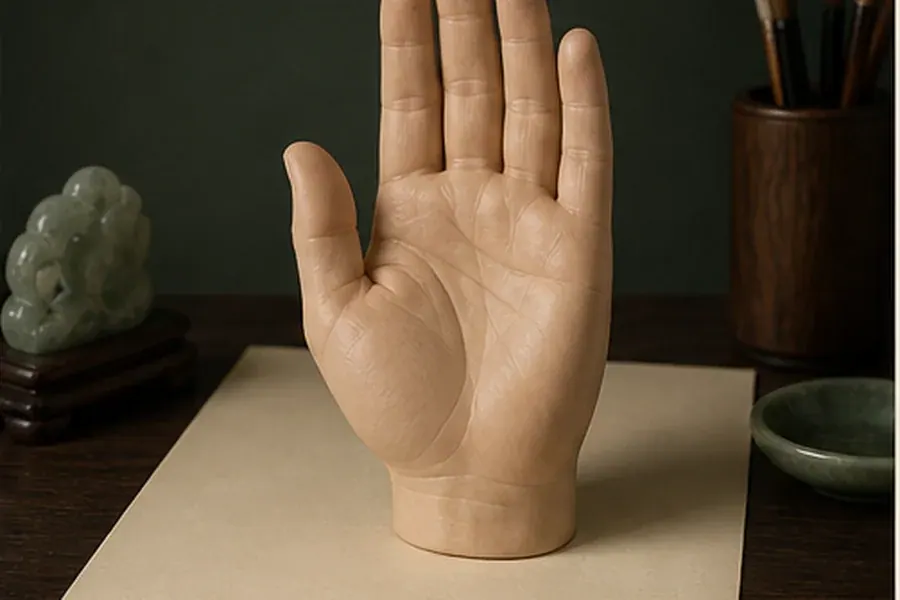
There is no “the” map
In each region several different systems coexist, with nomenclature, theory and locations that differ substantially. Chinese hand acupuncture, Su Jok and the Korean systems are not the same map under other names.
- Ear
- Chinese nomenclature and European cartographies; schools are not identical
- Scalp
- Jiao, Zhu, Lin and standardized lines, among others
- Hand
- Chinese, Su Jok and Korean systems; even laterality changes
- One and the same label
- May follow different paths across schools
Common mistake: Mixing two standards in the same session because “they say much the same thing”. They do not, and the result belongs to neither.
Two manuals place the same scalp line along different paths. What do you conclude?
What is really underneath the area of the auricle — the visible part of the ear — that a map calls “liver”?
Each device with the region that uses it

Level complete!
Map covered. The next one reads faster.
Did you enjoy it? In the app you save your progress, review what you forget and unlock the 770 exercises.
Study content. The exercises describe concepts of Traditional Chinese Medicine; they are not medical advice.
