The tongue: Shape, size and moisture
What you see without looking at colour at all. 6 activities, about 13 minutes.
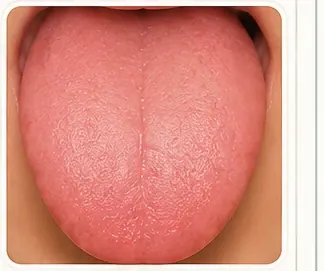
Swollen or thin
Volume speaks about fluids: too many and the tongue swells and presses against the teeth; too few and it thins. It is a dimension independent of colour and sometimes the only one that moves.
- Swollen
- damp or yang deficiency
- With tooth marks
- Spleen qi deficiency
- Thin and narrow
- blood or yin deficiency
- Swollen and pale
- the commonest combination in digestive cases
Common mistake: Confusing a large tongue with a swollen one. What matters is whether it presses against the teeth, not its absolute size.
Bloating after meals, loose stools, heavy legs and morning fatigue. What size do you expect?
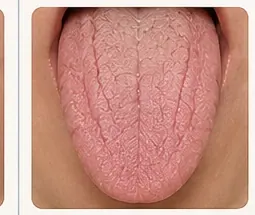
Dry or wet
Moisture is judged with the tongue out for a few seconds, in daylight. It is the fastest-changing dimension and therefore the one that best reports whether a treatment is doing anything.
- Dry
- heat, or fluids consumed
- Normal
- moist without excessive shine
- Very wet or slippery
- damp, cold, yang deficiency
- Dry with a thick coating
- heat that has already burned fluids
Common mistake: Judging it right after the patient has drunk, or after ten minutes of talking with the mouth open.
Persistent dryness, insomnia before dawn and hot palms for years. What surface finding do you expect?
Which dimension does each observation belong to?
- It has turned redder than last time
- It presses against the teeth and the marks show
- It has thinned and no longer covers the centre
- It shines and looks slippery
- The right border is paler than the left
- It went from white to yellow in four days
A patient with gastritis and a coating peeled in a single area. Where do you look for it?

Level complete!
Recorded. That standard is yours now.
Did you enjoy it? In the app you save your progress, review what you forget and unlock the 723 exercises.
Study content. The exercises describe concepts of Traditional Chinese Medicine; they are not medical advice.