Xià Kū Cǎo · Prunella Spike
Xià Kū Cǎo (夏枯草, Prunella Spike) is a herb of Cold nature and Bitter, Pungent flavor, in the “Heat Clearing” category. Tradition uses it to clear the heat of the Liver and eliminate the fire, Dissolve masses and nodules of phlegm-heat, Reduce blood pressure.
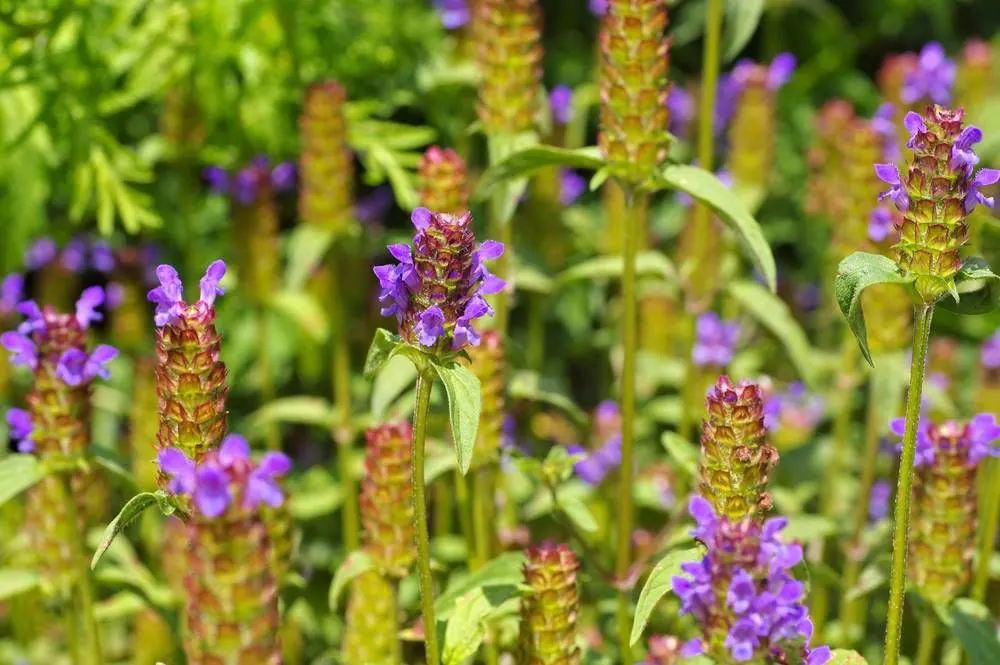
Energetic profile
- Pinyin name
- Xià Kū Cǎo
- Characters
- 夏枯草
- Botanical name
- Prunella vulgaris L.
- Family
- Lamiaceae
- Part used
- Spike
- Nature
- Cold
- Flavor
- Bitter, Pungent
- Meridians
- Liver, Gallbladder
- Category
- Heat Clearing
- Toxicity
- Non-toxic
- Pregnancy
- Caution
- Origin
- China, Europe, North America
Actions according to tradition
- Clear the heat of the Liver and eliminate the fire
- Dissolve masses and nodules of phlegm-heat
- Reduce blood pressure
Traditional uses
- Red, swollen and painful eyes due to heat-fire of the Liver
- Headache and hypertension due to ascending Yang of the Liver
- Scrofula, lymphadenopathy and goiter due to phlegm-heat
- Mastitis and breast nodules
- Hypertension
Studied effects and current applications
- Cleanses the heat of the Liver, relieving red, painful and swollen eyes
- Dissolves nodules and masses of phlegm-heat (scrofula, thyroid nodules)
- Significant hypotensive in hypertension due to ascending Liver Yang
- Antibacteriano y antiviral
- Anti-inflammatory and antitumor (research)
Applications under investigation
- Hypertension
- Hyperthyroidism and thyroid nodules
- Conjunctivitis and uveitis
- Lymphadenopathy and scrofula
- Cancer (anti-tumor research)
An effect being investigated does not mean it has been proven in humans.
Contraindications and adverse effects
Absolute contraindications
- Spleen deficiency with diarrhea due to cold
- Liver cold without heat pattern
Relative contraindications
- Pregnancy in high doses
- Hypotension
- Pregnancy
- Use with caution. High doses can affect pregnancy.
- Breastfeeding
- Use with caution. Limited data.
- Children
- Use with caution in children. Reduce dose.
- Older adults
- Useful for elderly people with hypertension and thyroid nodules. Combine with warm spleen herbs.
Possible adverse effects
- Diarrhea due to cold nature
- High dose hypotension
When to stop
- Diarrhea appears
- Symptomatic hypotension
- Spleen deficiency worsens
Interactions with medications
| Group | Drugs | Severity | Effect and recommendation |
|---|---|---|---|
| Antihypertensives | Amlodipino, Enalapril, Losartan | Moderate | Significant additive hypotensive effect Monitor blood pressure closely. |
| Antitiroideos | Metimazol, Propiltiouracilo | Mild | Potentially complementary effects on the thyroid Monitor thyroid function. |
| Inmunosupresores | Ciclosporina, Tacrolimus | Mild | Xia Ku Cao has immunomodulatory effects that may interfere with immunosuppression Use with medical supervision in transplant recipients. |
With other herbs
- ju_hua Synergy to cleanse the heat of the Liver and treat inflamed eyes and hypertension
Reference dose
- Decoction
- 9-15 g daily
- Powder
- 3-6 g daily
- Acute use
- 1-2 weeks
- Chronic use
- 1-2 months
- Maximum
- Avoid very prolonged use due to very cold nature
- Children
- Use with caution in children. Reduce dose.
Forms of preparation
Boil 9-15g in 3 cups of water for 30 min. Drink lukewarm to cool.
Hypertension, swollen eyes, thyroid nodules
Infuse 9g for 15 min. Drink 2-3 cups a day for mild hypertension.
Mild to moderate hypertension and red eyes
Approximate doses from the literature; they are not a prescription. Consult a professional.
Active compounds
Triterpenes (ursolic, oleanolic acid) and phenolics (rosmarinic, caffeic)
Pentacyclic triterpene acids · Hepatoprotective, anti-inflammatory, antihypertensive
NF-κB inhibition, hepatocyte protection, vasodilation · 1-3%
Phenolic acids · Antioxidant, anti-inflammatory, hepatoprotective
Free radical scavenging, COX-2 and 5-LOX inhibition · 0.5-2.0%
Flavonoids · Anti-inflammatory, antitumor
NF-κB inhibition, apoptosis induction · 0.2-1.0%
Heteropolysaccharides · Immunomodulator, antiviral
Macrophage activation, viral replication inhibition · 5-15%
Harvesting and processing
- Harvest
- Summer (June-August), when the spikes are in bloom
Spikes with stems collected in summer during flowering. They dry in the sun. The entire aerial part (果穗) is used medicinally.
Ears with stems cut and dried in the sun.
Health notice. Educational and study content. It describes concepts of Traditional Chinese Medicine and does not replace diagnosis or treatment by a healthcare professional. Needling, medicinal herbs and invasive techniques must be applied by trained professionals. Safety guide.