Hand microsystems
Comparison of hand maps without merging Chinese hand acupuncture, Su Jok, and Korean systems as though they were one.
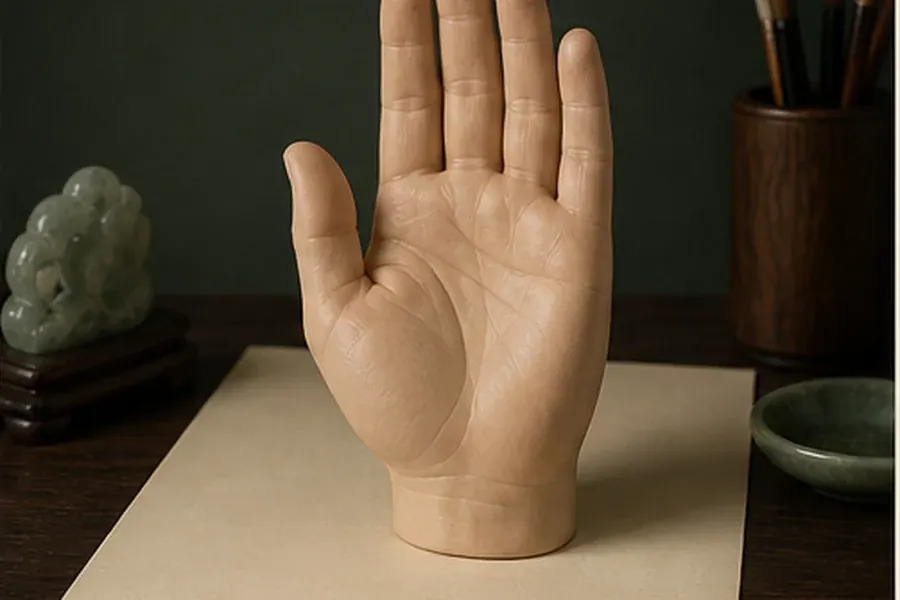
History
Multiple modern and traditional systems use the hand and fingers. Their nomenclature, theory, and locations differ substantially.
The map model
Some systems project the whole body; others organize points by symptoms or meridians. Laterality also varies.
Regions of the map
Volar surface between wrist and finger bases.
Trunk projections in several maps.
Study creases and eminences as landmarks, not diagnoses.
Posterior surface of metacarpals and joints.
Posterior maps and extra hand points.
Differentiate classical meridian points from microsystem points.
First digit and thenar eminence.
Head or trunk depending on the system.
Always note laterality and school.
Phalanges and joints of digits 2–5.
Limbs, head, or meridian sequences.
Do not use a finger map without its original legend.
Palmar and dorsal creases and bony prominences.
Map transitions and nearby classical points.
Recognize tendons, vessels, and nerves before studying technique.
What the evidence says
Research is heterogeneous and does not support treating all maps as equivalent. Tenderness to pressure does not confirm disease.
Safety
Do not puncture or use intense pressure over injury, neuropathy, infection, or impaired circulation. Invasive techniques are professional.
Health notice. Educational and study content. It describes concepts of Traditional Chinese Medicine and does not replace diagnosis or treatment by a healthcare professional. Needling, medicinal herbs and invasive techniques must be applied by trained professionals. Safety guide.