Chinese dietary therapy · Sour, bitter, sweet, pungent, and salty
The Five Flavors
Flavors as culinary qualities and functional symbols within Five Element correspondences.
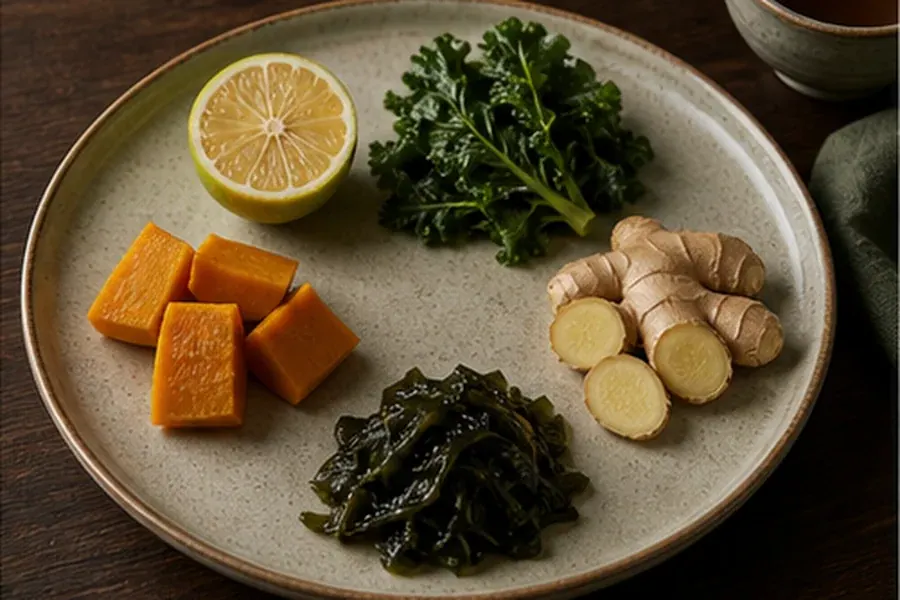
Taste and category
The described flavor may match the palate or be an inherited textual category.
- A food may have several flavors.
- Translations vary across sources.
Correspondences
Relationships with Zang-Fu and Qi movements organize classical study; they do not equal direct pharmacological action.
- Sour–Wood, bitter–Fire, sweet–Earth.
- Pungent–Metal and salty–Water.
Culinary balance
A meal can be studied through contrast and flavor harmony without assigning a clinical outcome.
- Observe predominance, not perfection.
- Consider sugar and sodium through modern nutrition.
Health notice. Educational and study content. It describes concepts of Traditional Chinese Medicine and does not replace diagnosis or treatment by a healthcare professional. Needling, medicinal herbs and invasive techniques must be applied by trained professionals. Safety guide.