Microsystems: Abdomen and face
Where the map gets confused with what lies beneath. 5 activities, about 10 minutes.
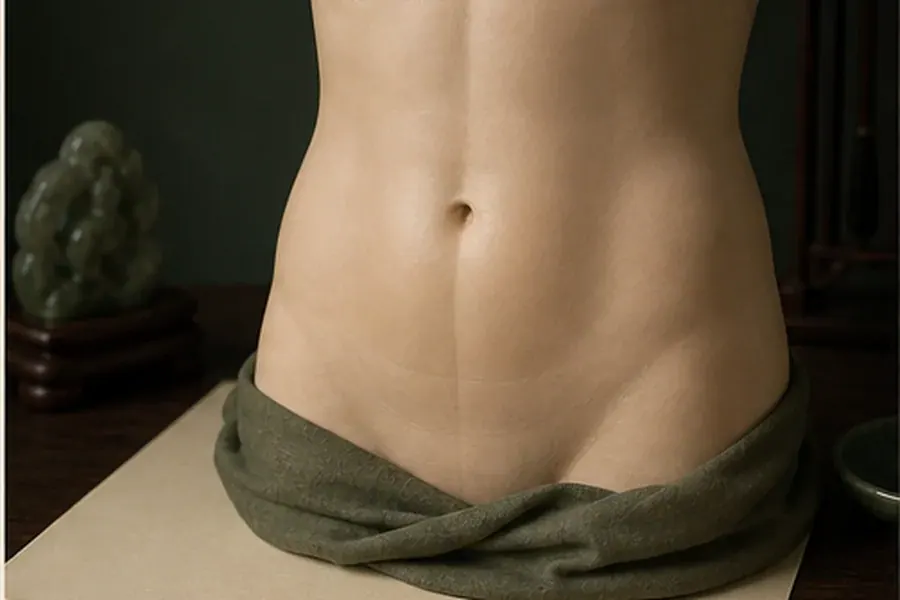
Built from the navel
腹针 Fù Zhēn
Contemporary abdominal cartography — associated especially with Bo Zhiyun's system — uses the navel, the midline and proportional distances. It is distinct from the classical Ren Mai and Kidney channels, and it is not a map of internal anatomy.
- Navel and midline
- The two references it is built from
- Proportional distances
- The map adapts to the body, not the other way round
- Not internal anatomy
- It does not point at the organ underneath
- No substitute for examination
- An abdomen gets examined medically when it should
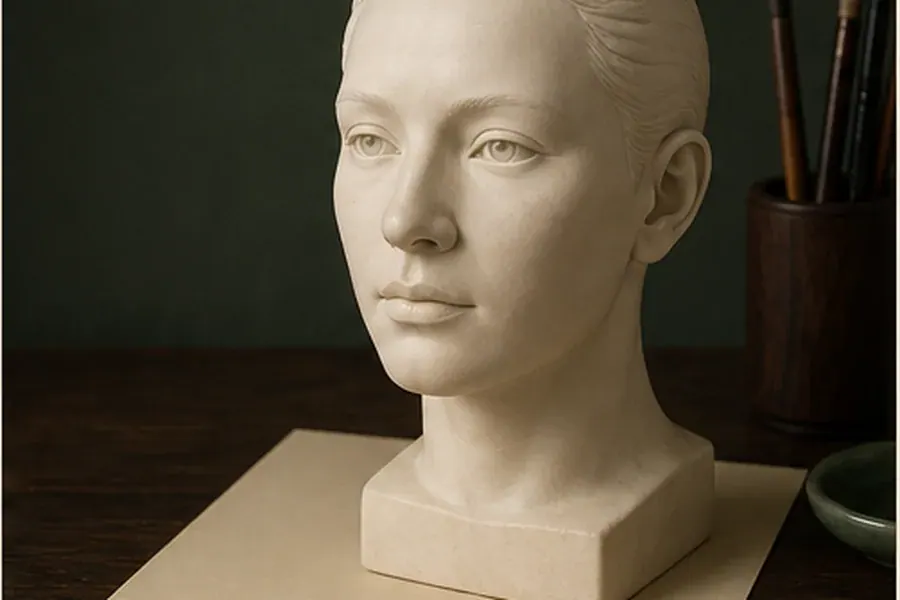
Two different things on the same face
Facial inspection belongs to the four traditional methods. Modern facial microsystems are something else: they add specific cartographies whose boundaries and meanings are not universal.
- Inspection in the four methods
- General observation, inside the classical frame
- Modern facial microsystem
- A specific cartography from a particular school
- A photograph
- Does not allow organs to be diagnosed
- Lighting, skin, medication
- Alter appearance before any finding does
Common mistake: Reading the color of a face as an organ report. Normal human diversity covers almost the whole range being interpreted.
Someone sends a photo of their face asking for a facial-microsystem reading. What fails first of all?
Why does the abdominal map use proportional distances instead of centimeters?
Each thing with the frame it belongs to

Level complete!
Well closed. The landmarks are yours now.
Did you enjoy it? In the app you save your progress, review what you forget and unlock the 723 exercises.
Study content. The exercises describe concepts of Traditional Chinese Medicine; they are not medical advice.