Zang Fu organs: Solid and hollow
Some store, others let things through. 6 activities, about 12 minutes.
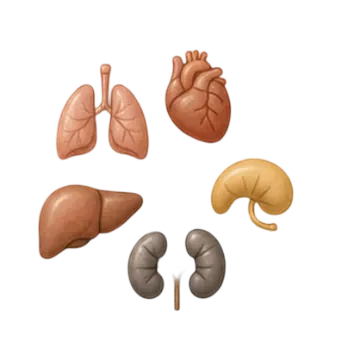
An organ is a set of functions
臟腑 zàng fǔ
When Chinese medicine says «Spleen» it is not talking about the organ a surgeon removes: it means the capacity to transform food and to hold things in place. That is why someone without an anatomical spleen can have a perfectly working Spleen in this sense.
- The name
- a function, not a viscus
- The territory
- a tissue, an opening and an emotion
- The channel
- the road you reach it by
Common mistake: Arguing about whether the spleen «really» digests. The question is malformed: these are two different maps of the same body.
Two families with two jobs
The solid ones store pure substances and never empty completely; the hollow ones receive, transform and expel, and their virtue is not to retain. From that comes a large rule: solid organs are almost always tonified and hollow ones almost always unblocked.
- Solid organs
- store: qi, blood, essence, fluids
- Hollow organs
- transport: food, waste, fluids
- Typical solid pathology
- deficiency
- Typical hollow pathology
- obstruction
Common mistake: Tonifying a blocked hollow organ. What it needs is the way opened.
Sort each organ into its family.
- Liver
- Gallbladder
- Kidney
- Bladder
- Lung
- Large Intestine
- Heart
- Stomach
Match each solid organ with its coupled hollow one.
What does an interior-exterior pairing actually let you do in practice?
The uterus, the marrow and the brain fit neither family. Why?

Level complete!
We close the block with the flame high. Well done!
Did you enjoy it? In the app you save your progress, review what you forget and unlock the 723 exercises.
Study content. The exercises describe concepts of Traditional Chinese Medicine; they are not medical advice.