Zang Fu organs: The five solid organs
What each one does and what breaks if it fails. 6 activities, about 15 minutes.
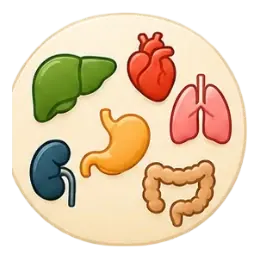
Heart: governs blood and houses the mind
It moves blood through the vessels and, above all, it is where lucid awareness lives. That is why Heart pictures show at once in the pulse and in how someone talks and sleeps.
- Opens into
- the tongue: which is why speech is affected
- Shows in
- the face and its colour
- If it flags
- palpitations, insomnia, startling
- If it burns
- mouth ulcers, agitation, hot urine
Common mistake: Looking only for palpitations. Waking in the night and rushed speech betray the Heart before the pulse does.
Spleen: transforms, transports and holds up
It turns food into qi and blood, and it also keeps things in place: blood inside the vessels and organs in position. It is the organ most damaged by cold food, excess sweetness and ruminating thought.
- Opens into
- the mouth; shows in the lips
- Its tissue
- the muscles and the four limbs
- If it fails to transform
- bloating, loose stools, fatigue after eating
- If it fails to hold
- easy bruising, prolapse, periods that will not stop
Common mistake: Ignoring the holding function. It explains pictures that otherwise seem to have nothing to do with digestion.
Lung: governs qi and the surface
It takes in air, spreads defensive qi under the skin and makes fluids descend. It is the most exposed organ because it communicates with the outside, and so it is the first to fall ill when something gets in.
- Opens into
- the nose
- Its tissue
- skin and body hair
- If it fails to spread
- repeated colds, spontaneous sweating
- If it fails to descend
- cough, breathlessness, facial oedema
Common mistake: Thinking only about breathing. A good part of skin and sweating pathology reads through the Lung.
Kidney: stores essence and is the root
It stores the essence you are born with and age through, governs bones and marrow, and is the root of yin and yang for the whole body. It is spent slowly and replenished slowly: there is no shortcut.
- Opens into
- the ears and the two lower orifices
- Its tissue
- the bones; shows in the hair
- If yang is short
- cold, dull low back pain, clear night urine
- If yin is short
- afternoon heat, ringing ears, dryness
Common mistake: Treating it in a hurry. Kidney pictures need the most time, and promising weeks is promising badly.
Liver: keeps things moving and stores blood
Its job is that nothing gets stuck: not qi, not emotions, not digestion, not the menstrual cycle. It also stores blood at rest and releases it on movement. It is the organ that suffers most from held-in emotion.
- Opens into
- the eyes
- Its tissue
- tendons; shows in the nails
- If it stagnates
- tightness, sighing, irritability, painful periods
- If it rises
- temporal headache, red eyes, dizziness
Common mistake: Calling every irritation «Liver». Stagnation has its own signs and rising has quite different ones.
Which solid organ best explains each finding?
- Wakes at two and cannot stop thinking
- Bruises with no knock and bleeding gums
- One cold after another every winter
- Sighs constantly and the chest feels tight
- Weak knees and ringing ears by the end of the day
- Fatigue that arrives right after eating
- Painful periods with clots and very irritable beforehand
- Talks a lot and fast, with a red tongue tip

Level complete!
Good heat! You took the whole set of relationships with you.
Did you enjoy it? In the app you save your progress, review what you forget and unlock the 723 exercises.
Study content. The exercises describe concepts of Traditional Chinese Medicine; they are not medical advice.