Wuchu (BL5)
Wuchu (BL5), “Fifth Place”, is a point on the Bladder meridian. It is point 5 of the 67 on the channel. Clears the head, extinguishes Wind and calms convulsions.
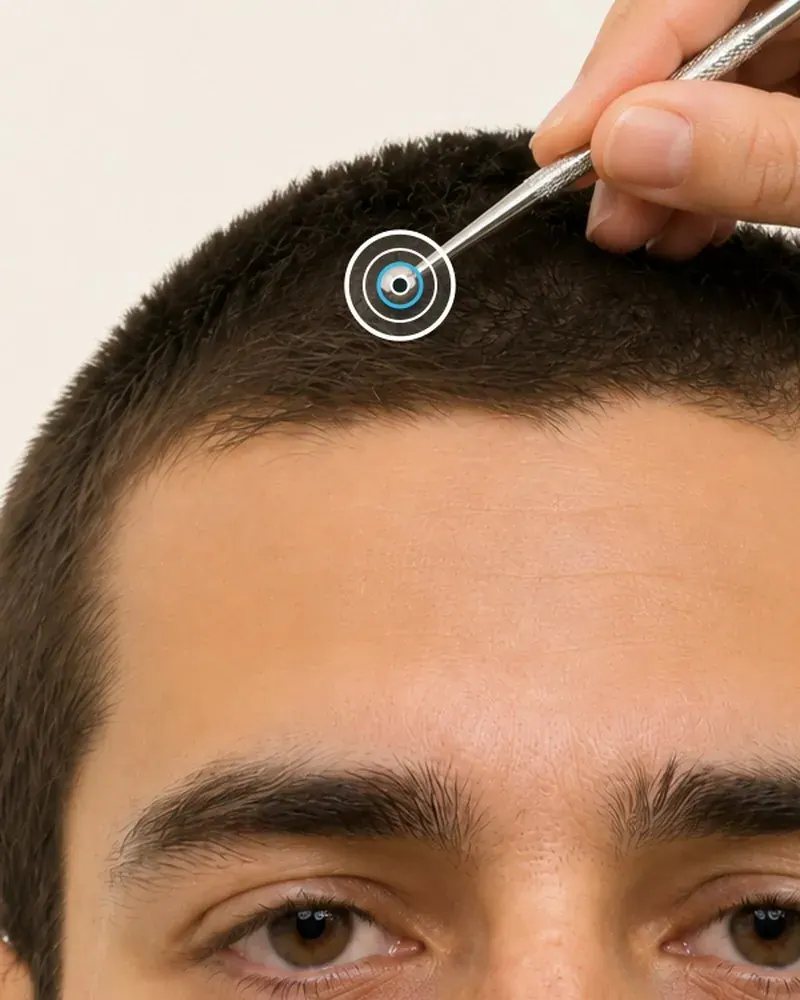
Location
On the head, 1 cun above the anterior hairline, 1.5 cun lateral to the anterior median line.
According to the WHO (2008): On the head, 1 B-cun superior to the anterior hairline, 1.5 B-cun lateral to the anterior median line. Note: 0.5 B-cun superior to BL4, at the same level as GV23.
How to find it, step by step
Three steps with photos, from an easy landmark to the exact point. Measurements are in cun, the width of the person's own thumb.
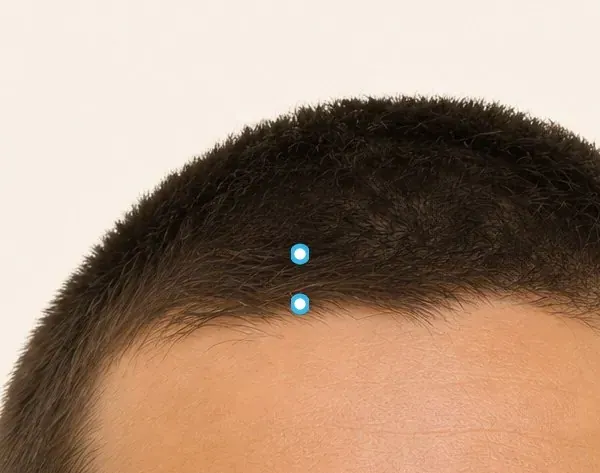 BL4Hairline1
Find BL4
1.5 cun from the midline, half a cun into the hairline.
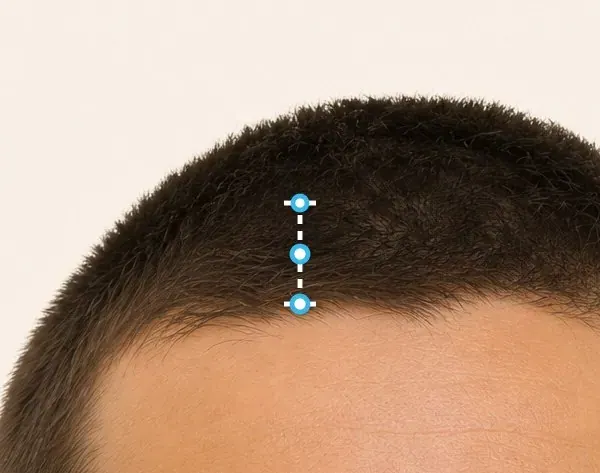 1 cun2
Go up half a cun
On the same line, half a cun higher, level with GV23 (1 cun into the hairline at the center): Wǔchù.
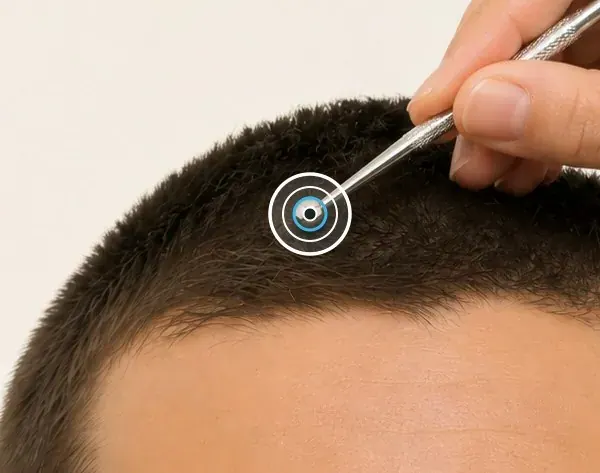 3
Press inside the hairline
Transverse, shallow.
Functions according to tradition
Clears the head, extinguishes Wind and calms convulsions.
Traditional indications
- Headache
- Dizziness
- Epilepsy
- Blurred vision
Indications described by tradition; they do not amount to proven clinical effectiveness for each one.
Precautions
- Needling depth
- 0.3–0.5 cun
- Angle
- Transverse
Needling must always be done by a trained professional. At home, only gentle finger pressure.
Points on other channels with similar indications
They share several traditional indications with this point. Comparing them helps understand why one or the other is chosen.
- GV17 Naohu (Du Mai (Governing Vessel)): Blurred vision, Dizziness, Epilepsy
- GB13 Benshen (Gallbladder): Dizziness, Epilepsy, Headache
- GV19 Houding (Du Mai (Governing Vessel)): Dizziness, Epilepsy, Headache
- GB15 Toulinqi (Gallbladder): Dizziness, Headache
- GB16 Muchuang (Gallbladder): Blurred vision, Headache
- GB17 Zhengying (Gallbladder): Dizziness, Headache
Point profile
- Code
- BL5
- Pinyin name
- Wǔ Chǔ
- Characters
- 五处
- Translation
- Fifth Place
- Meridian
- Bladder
- Element
- Water
- Topics
- Head & Neck, Epilepsy, Eyes
Health notice. Educational and study content. It describes concepts of Traditional Chinese Medicine and does not replace diagnosis or treatment by a healthcare professional. Needling, medicinal herbs and invasive techniques must be applied by trained professionals. Safety guide.
