Zhiyin (BL67)
Zhiyin (BL67), “Reaching Yin”, is a point on the Bladder meridian. It is point 67 of the 67 on the channel. Jing-Well of the Bladder: turns the fetus (with moxa), expels Wind and clears the head and eyes.
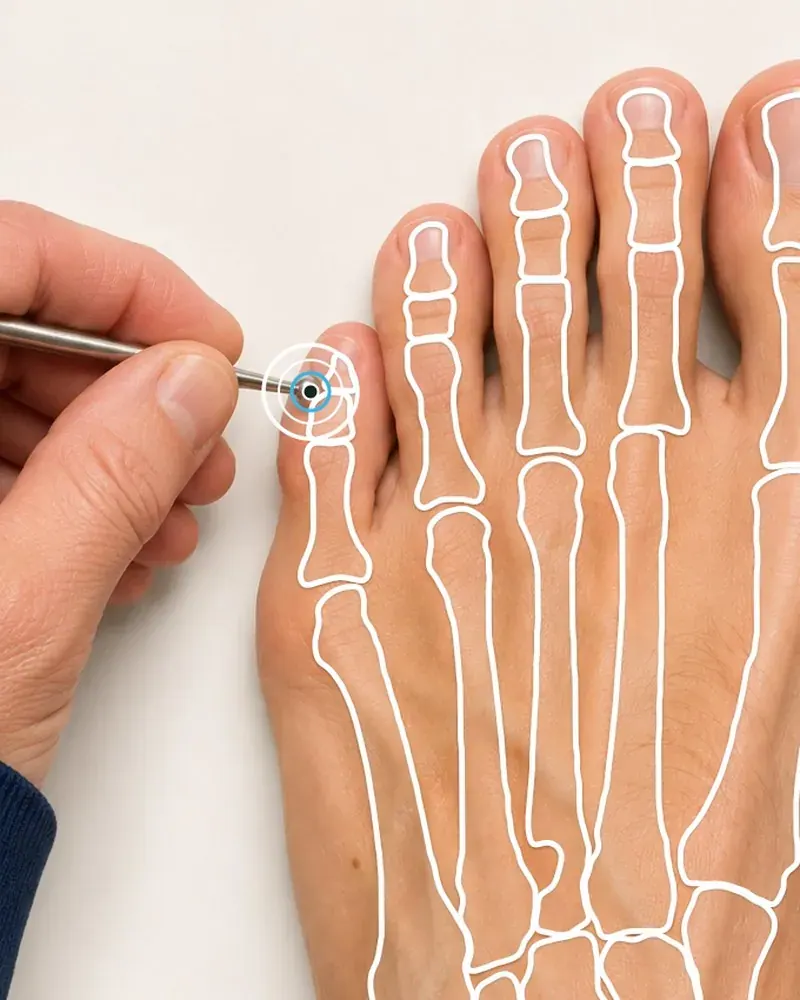
Location
On the lateral side of the little toe, 0.1 cun from the corner of the nail.
According to the WHO (2008): On the little toe, lateral to the distal phalanx, 0.1 F-cun proximal to the lateral corner of the toenail, at the intersection of the vertical line of the lateral border of the nail and the horizontal line of the base of the toenail.
How to find it, step by step
Three steps with photos, from an easy landmark to the exact point. Measurements are in cun, the width of the person's own thumb.
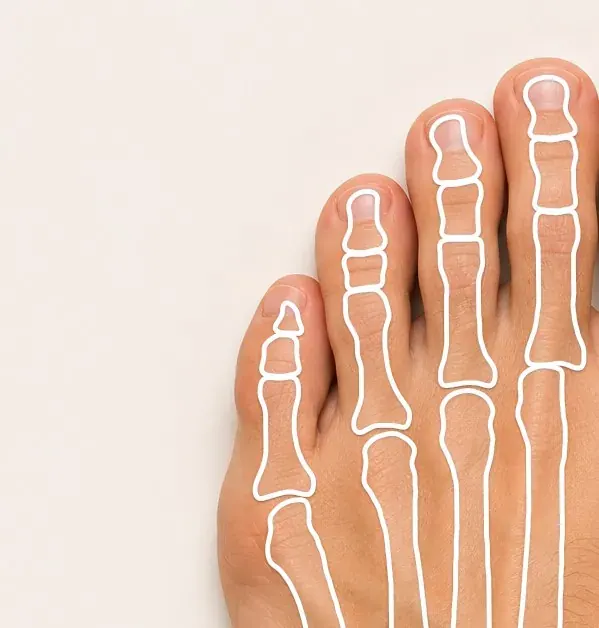 1
Find the nail of the little toe
Look at its outer edge and the line of its base.
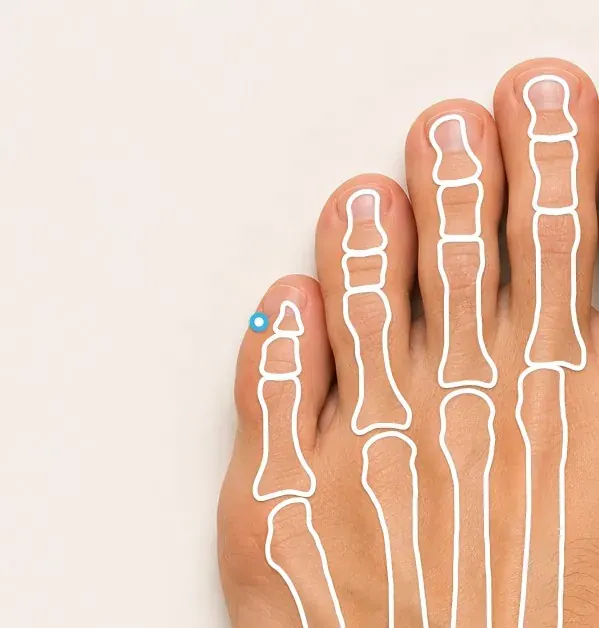 2
Cross the two lines
Zhìyīn is where they cross, 0.1 cun outside the corner.
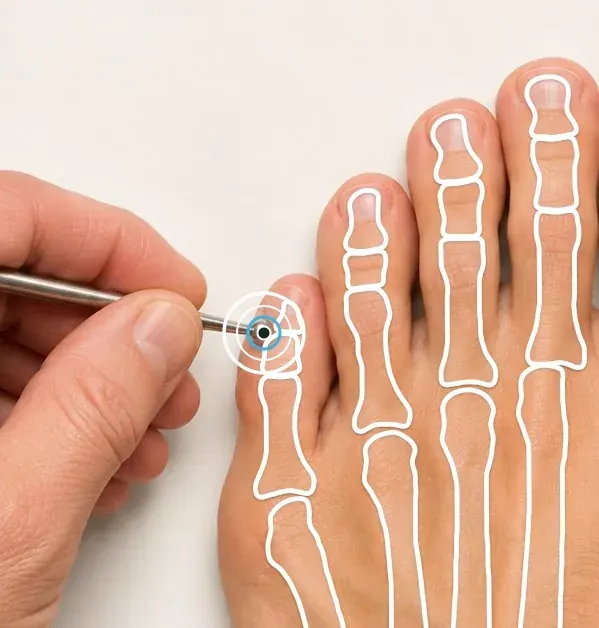 3
Press next to the nail
Shallow, 0.1 cun. During pregnancy, only a professional.
Functions according to tradition
Jing-Well of the Bladder: turns the fetus (with moxa), expels Wind and clears the head and eyes.
Traditional indications
- Fetal malposition
- Difficult labor
- Occipital headache
- Nasal congestion
- Eye pain
Indications described by tradition; they do not amount to proven clinical effectiveness for each one.
What its classification means
It is the first or last point of the channel, at the tip of a finger or toe, where tradition says the Qi “wells up”. It is credited with a rapid effect and has been used to clear heat and in acute situations.
Precautions
Contraindicated during pregnancy except for moxibustion to turn a breech baby (around week 34), always by a professional.
- Needling depth
- 0.1 cun (shallow)
- Angle
- Superficial
Needling must always be done by a trained professional. At home, only gentle finger pressure.
Point profile
- Code
- BL67
- Pinyin name
- Zhì Yīn
- Characters
- 至阴
- Translation
- Reaching Yin
- Meridian
- Bladder
- Element
- Water
- Classification
- Jing-Well
- Topics
- Labor, Head
Health notice. Educational and study content. It describes concepts of Traditional Chinese Medicine and does not replace diagnosis or treatment by a healthcare professional. Needling, medicinal herbs and invasive techniques must be applied by trained professionals. Safety guide.
