Qimen (LV14)
Qimen (LV14), “Cycle Gate”, is a point on the Liver meridian. It is point 14 of the 14 on the channel. Front-Mu of Liver.
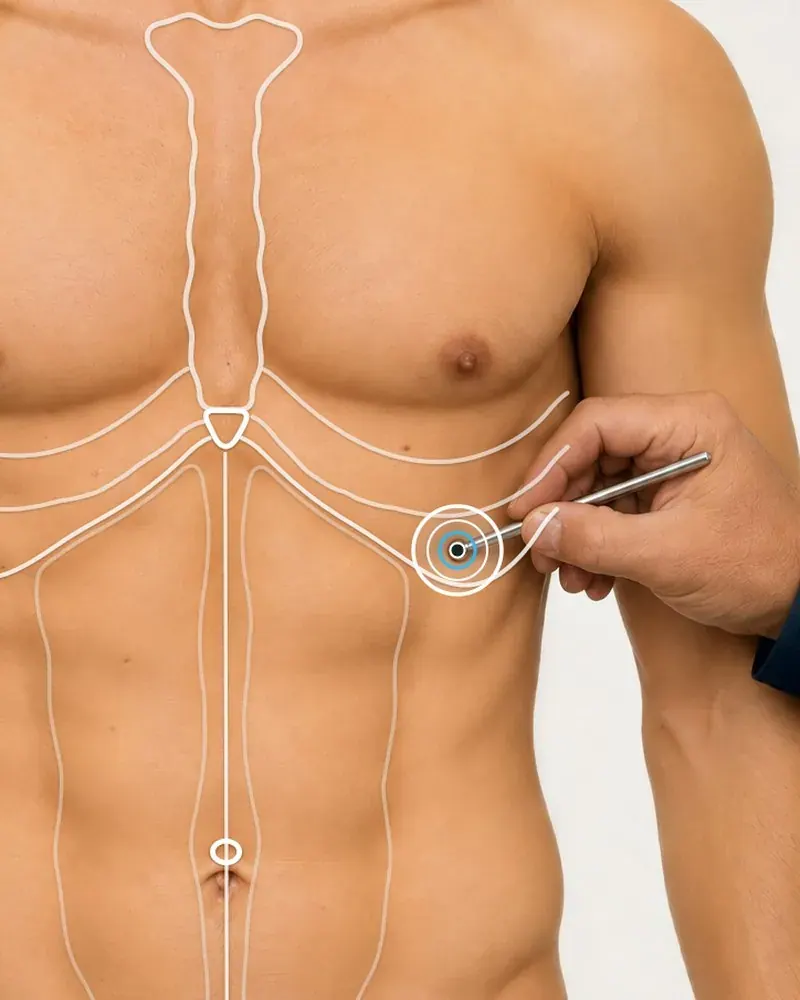
Location
On the chest, in the 6th intercostal space, 4 cun lateral to the anterior midline (in men, directly below the nipple).
According to the WHO (2008): In the anterior thoracic region, in the sixth intercostal space, 4 B-cun lateral to the anterior median line.
How to find it, step by step
Three steps with photos, from an easy landmark to the exact point. Measurements are in cun, the width of the person's own thumb.
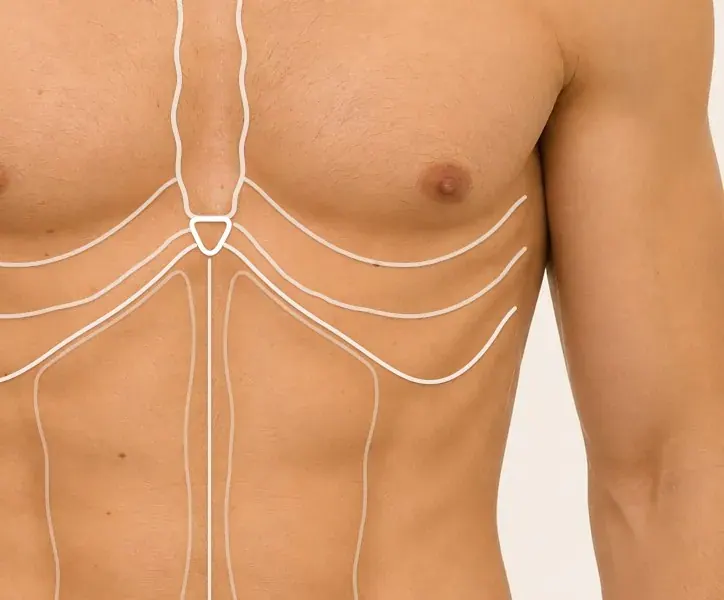 Nipple (4th space)Costal margin1
Find the nipple and the edge of the ribs
In men, the nipple is in the 4th intercostal space, 4 cun from the midline.
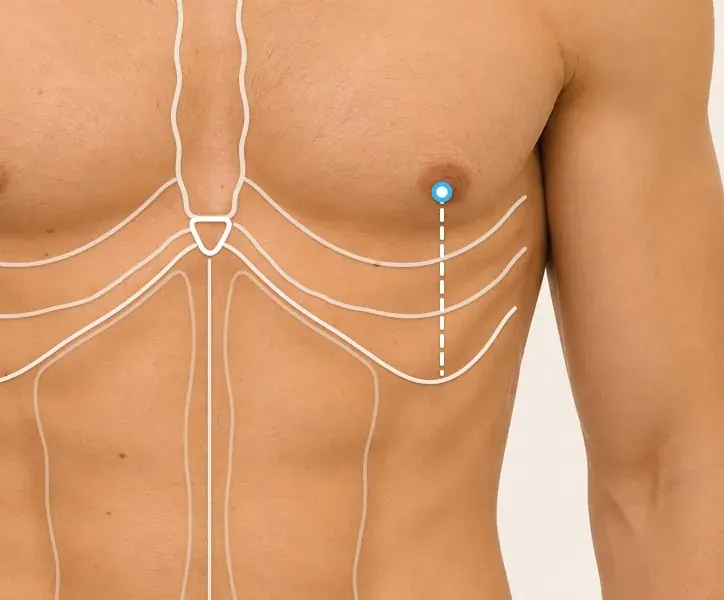 5th rib6th rib6th space2
Go down two spaces
From the nipple (4th space), go straight down two spaces: LR14 is in the 6th intercostal space, close to the level of ST19 (6 cun above the navel). Below it there is still one more space, the 7th (GB24), before the edge of the ribs.
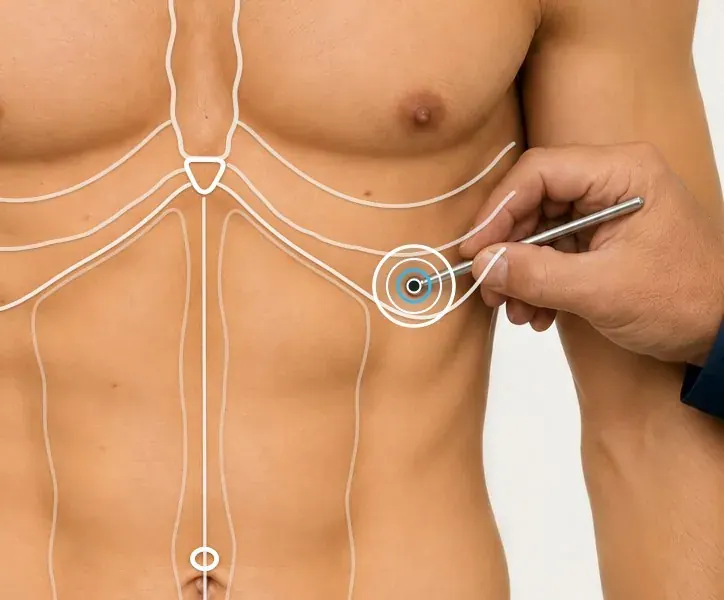 3
Press in the 6th space
In line with the nipple, in the 6th space. Oblique or transverse and shallow, because of the lung.
Functions according to tradition
Front-Mu of Liver. Smooths Liver Qi, resolves Liver Qi stagnation, harmonizes Liver and Stomach, invigorates Blood.
Traditional indications
- Hypochondriac pain
- Hepatitis
- Gastritis
- Vomiting
- Diarrhea
- Mastitis
- Emotional stress
- Rib pain
Indications described by tradition; they do not amount to proven clinical effectiveness for each one.
What its classification means
On the chest or abdomen, where the Qi of an organ “gathers”. Its tenderness to pressure guides diagnosis; it is used more in acute conditions and those of the fu organs.
Precautions
Risk of pneumothorax. Oblique, shallow needling, never deep perpendicular.
- Needling depth
- 0.3–0.5 cun (oblique)
- Angle
- Oblique or transverse
Needling must always be done by a trained professional. At home, only gentle finger pressure.
Points on other channels with similar indications
They share several traditional indications with this point. Comparing them helps understand why one or the other is chosen.
- BL47 Hunmen (Bladder): Hypochondriac pain, Vomiting
- KI23 Shenfeng (Kidney): Mastitis, Vomiting
- PC1 Tianchi (Pericardium): Hypochondriac pain, Mastitis
- CV12 Zhongwan (Ren Mai (Conception Vessel)): Diarrhea, Gastritis
- KI19 Yindu (Kidney): Hypochondriac pain, Vomiting
- SP3 Taibai (Spleen): Diarrhea, Vomiting
Point profile
- Code
- LV14
- Pinyin name
- Qī Mén
- Characters
- 期门
- Translation
- Cycle Gate
- Meridian
- Liver
- Element
- Wood
- Classification
- Front-Mu (LV)
- Topics
- Liver, Chest, Lateral Pain
Health notice. Educational and study content. It describes concepts of Traditional Chinese Medicine and does not replace diagnosis or treatment by a healthcare professional. Needling, medicinal herbs and invasive techniques must be applied by trained professionals. Safety guide.
