Yinshi (ST33)
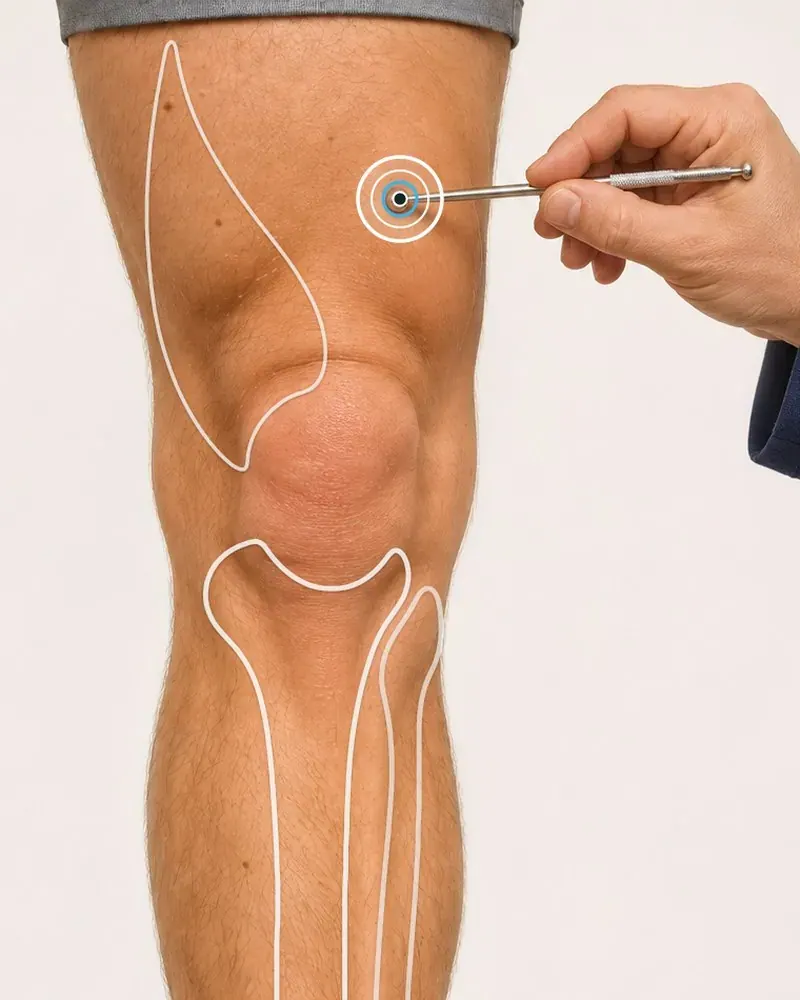
Yinshi (ST33), “Yin Market”, is a point on the Stomach meridian. It is point 33 of the 45 on the channel. Warms the channel and expels Cold from the knee and thigh.
Location
On the anterolateral aspect of the thigh, lateral to the rectus femoris tendon, 3 cun above the base of the patella.
According to the WHO (2008): On the anterolateral aspect of the thigh, lateral to the rectus femoris tendon, 3 B-cun superior to the base of the patella. Note: ST33 is at the midpoint of the line connecting ST32 with the lateral end of the base of the patella.
How to find it, step by step
Three steps with photos, from an easy landmark to the exact point. Measurements are in cun, the width of the person's own thumb.
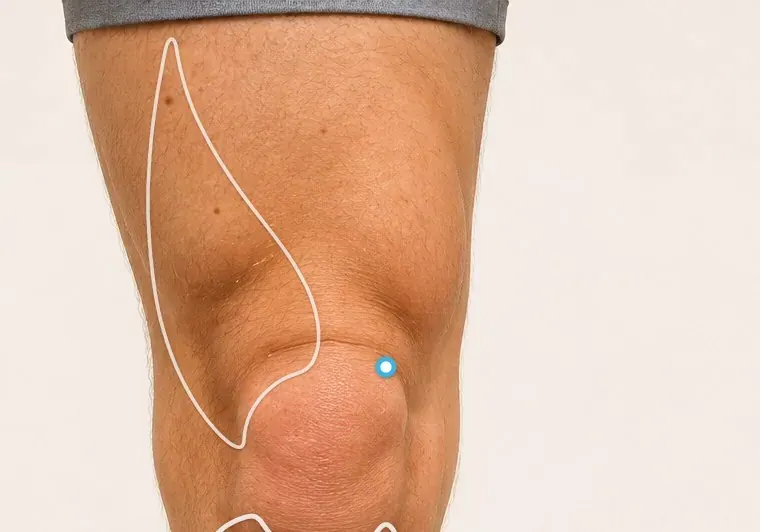 Base of patella1
Find the kneecap and its upper edge
With the leg straight, mark the upper edge of the kneecap on its outer side.
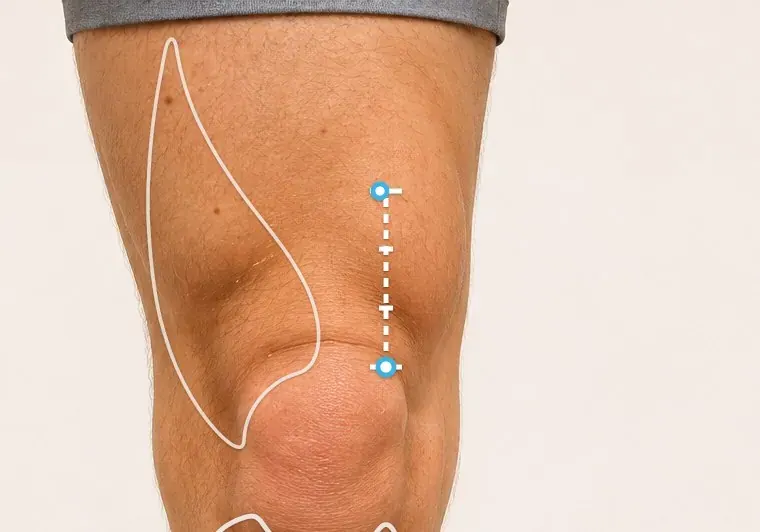 3 cun2
Go up 3 cun
Tense the thigh to feel the rectus femoris tendon in the center: Yīnshì is 3 cun (four fingers) above the kneecap, just outside the tendon, 1 cun above Liángqiū (ST34).
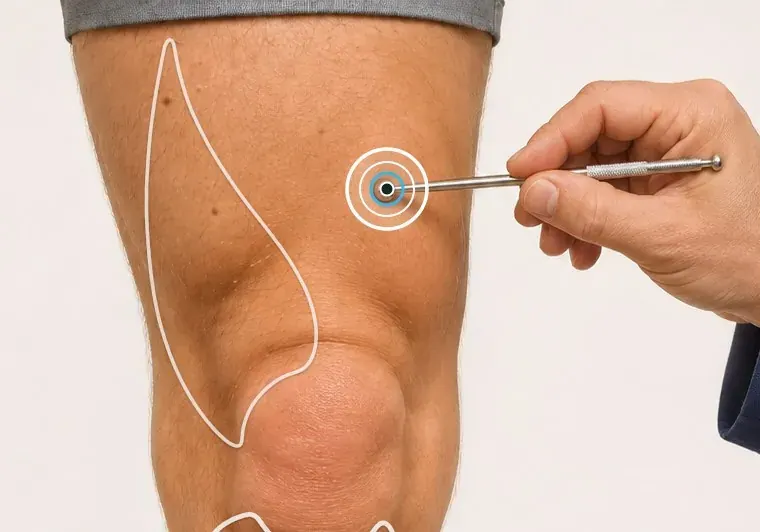 3
Press next to the tendon
Perpendicular.
Functions according to tradition
Warms the channel and expels Cold from the knee and thigh.
Traditional indications
- Cold, painful knee
- Leg weakness
- Numbness
Indications described by tradition; they do not amount to proven clinical effectiveness for each one.
Precautions
- Needling depth
- 1–1.5 cun
- Angle
- Perpendicular
Needling must always be done by a trained professional. At home, only gentle finger pressure.
Points on other channels with similar indications
They share several traditional indications with this point. Comparing them helps understand why one or the other is chosen.
- BL58 Feiyang (Bladder): Leg weakness
- GB29 Juliao (Gallbladder): Leg weakness
- GB31 Fengshi (Gallbladder): Leg weakness
- GB35 Yangjiao (Gallbladder): Leg weakness
Point profile
- Code
- ST33
- Pinyin name
- Yīn Shì
- Characters
- 阴市
- Translation
- Yin Market
- Meridian
- Stomach
- Element
- Earth
- Topics
- Knee, Cold, Leg
Health notice. Educational and study content. It describes concepts of Traditional Chinese Medicine and does not replace diagnosis or treatment by a healthcare professional. Needling, medicinal herbs and invasive techniques must be applied by trained professionals. Safety guide.