Chinese dietary therapy · Regularity, attention, and quantity
Meal rhythm and context
When, how, and how much one eats are part of traditional study and can be compared with current habits.
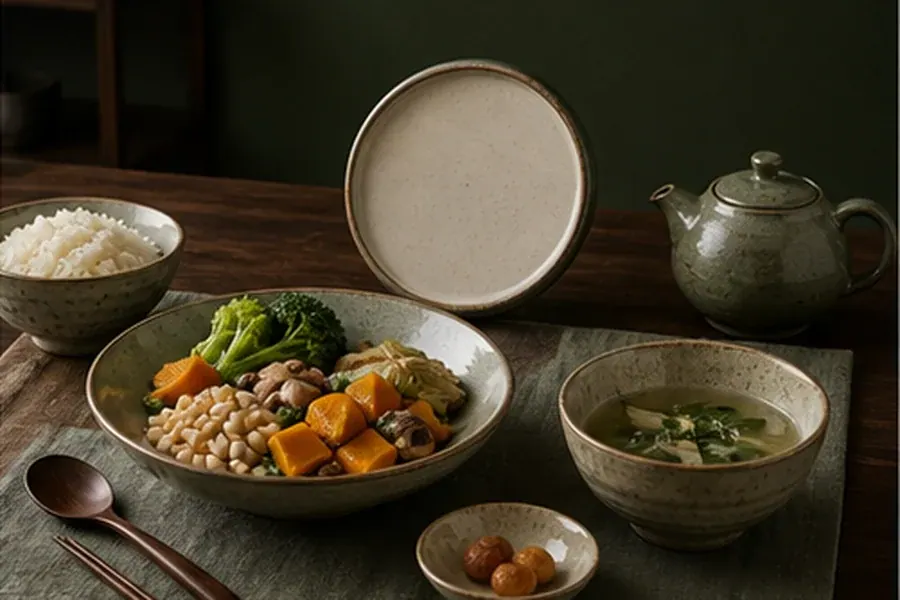
Flexible regularity
Predictable times may support organization but must adapt to work, medication, sport, and individual needs.
- Do not use hunger as a discipline test.
- Diabetes and eating disorders need specialist care.
Attention while eating
Reducing rush and distraction can help notice fullness and enjoyment without moralizing food.
- Chewing is not a cure.
- Company and culture also nourish.
Educational journal
Recording preparation, context, and response may support learning without turning normal variation into symptoms.
- Do not eliminate whole food groups after one observation.
- Seek advice for repeated or severe reactions.
Health notice. Educational and study content. It describes concepts of Traditional Chinese Medicine and does not replace diagnosis or treatment by a healthcare professional. Needling, medicinal herbs and invasive techniques must be applied by trained professionals. Safety guide.