Chinese dietary therapy · How preparation changes food
Cooking and transformation
Cooking, cutting, soaking, fermentation, and pairing alter texture, safety, tolerance, and traditional interpretation.
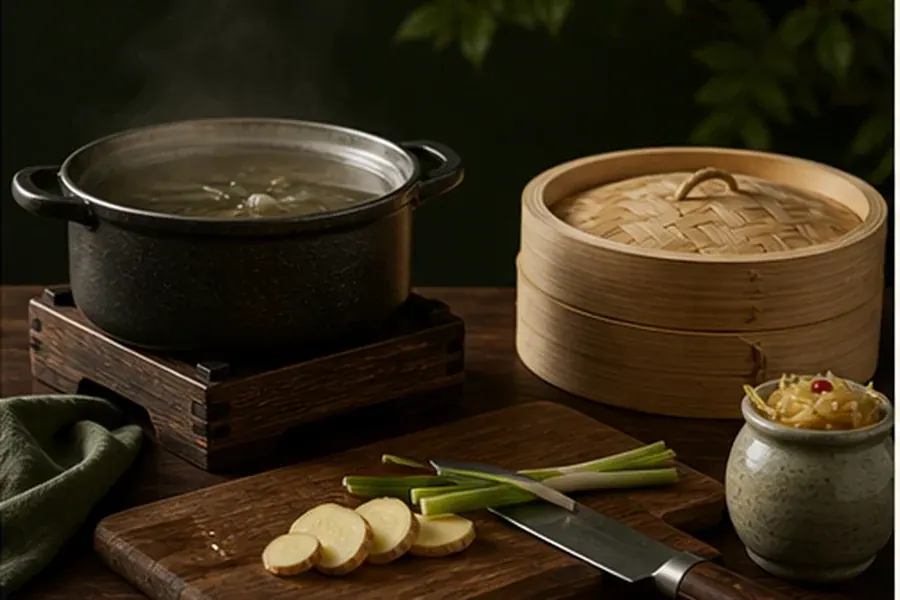
Moist methods
Congee, steaming, blanching, and stewing create soft textures and show the roles of water and time.
- Control temperature and storage.
- Softness does not guarantee individual tolerance.
Dry methods
Baking, roasting, and stir-frying concentrate aromas and change moisture; tradition often describes them as more warming.
- Avoid charring and excess oil.
- Quantity also transforms the meal.
Fermentation and safety
Fermented foods have their own techniques, microbiology, and risks; they should not be improvised without hygiene control.
- Use reliable methods and adequate refrigeration.
- Consider sodium and intolerances.
Health notice. Educational and study content. It describes concepts of Traditional Chinese Medicine and does not replace diagnosis or treatment by a healthcare professional. Needling, medicinal herbs and invasive techniques must be applied by trained professionals. Safety guide.