Zhī Bǎi Dì Huáng Wán
Zhī Bǎi Dì Huáng Wán (知柏地黄丸, “Anemarrhena, Phellodendron and Rehmannia Pill”) comes from Yi Fang Kao (1584 CE). Nourishes Kidney Yin and eliminates empty heat.
Main action
Nourishes Kidney Yin and eliminates empty heat
Liu Wei Di Huang Wan reinforced with Zhi Mu and Huang Bai to put out the virtual Kidney fire. Indicated when empty heat is the dominant symptom.
Indications
- Intense vacuum heat
- Profuse night sweats
- nocturnal emissions
- Dark painful urination
- Low back pain with sensation of heat
- Tongue
- Red, without coating or with a thin yellow coating
- Pulse
- Fast and fine
Composition
| Herb | Role | Dose | Function |
|---|---|---|---|
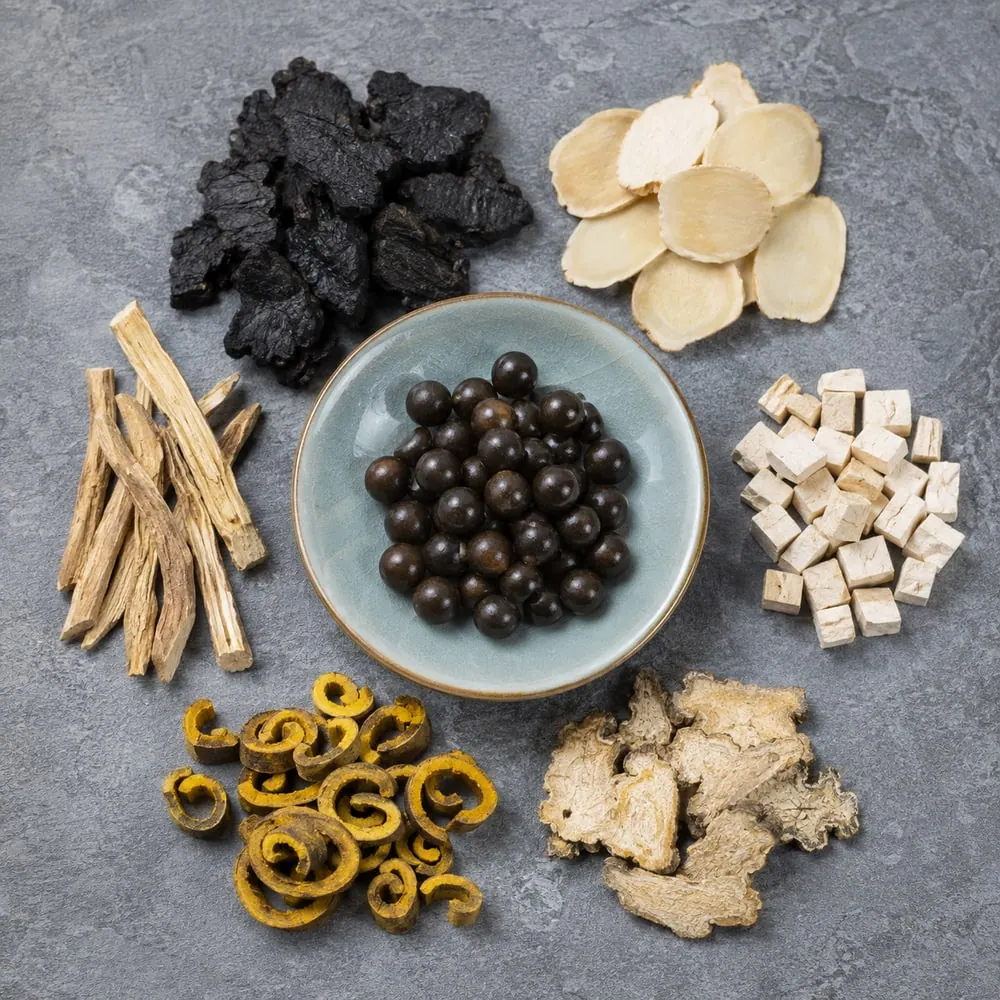
| Shú Dì Huáng 熟地黄 | Emperor (君 jūn) | 24g | Nourishes Yin and Kidney Blood |
| Shān Yào 山药 | Minister (臣 chén) | 12g | Tones Spleen and Kidney |
| Shān Zhū Yú 山茱萸 | Minister (臣 chén) | 12g | Nourishes Liver and Kidney |
| Fú Líng 茯苓 | Assistant (佐 zuǒ) | 9g | Strengthens Spleen |
| Zé Xiè 泽泻 | Assistant (佐 zuǒ) | 9g | Drains heat and humidity |
| Mǔ Dān Pí 牡丹皮 | Assistant (佐 zuǒ) | 9g | Cools Blood, drains heat void |
| Zhī Mǔ 知母 | Minister (臣 chén) | 9g | Cools heat, nourishes Yin, eliminates empty heat |
| Huáng Bǎi 黄柏 | Minister (臣 chén) | 9g | Drains Kidney fire, eliminates damp heat |
The emperor–minister–assistant–envoy hierarchy (君臣佐使) describes the role of each herb in the formula.
Preparation
Pill: 8-9g, 2-3 times/day. Decoction: boil 40 min
Current uses being studied
- Menopause with intense hot flashes
- Tuberculosis with night sweats
- Hyperthyroidism
- Recurrent urinary tract infections
Precautions
- Huang Bai can damage the Spleen: add Chen Pi or Sha Ren
- Do not use in Yang deficiency
- Avoid in diarrhea
Formulas must be prescribed by qualified professionals; they can interact with medications.
Profile
- Chinese name
- 知柏地黄丸
- English name
- Anemarrhena, Phellodendron and Rehmannia Pill
- Source
- Yi Fang Kao (1584 CE)
- Dynasty
- Ming
- Category
- Nourish Yin
- Constitutions
- Yin Deficiency Constitution
Health notice. Educational and study content. It describes concepts of Traditional Chinese Medicine and does not replace diagnosis or treatment by a healthcare professional. Needling, medicinal herbs and invasive techniques must be applied by trained professionals. Safety guide.