Chimai (TE18)
Chimai (TE18), “Spasm Vessel”, is a point on the San Jiao (Triple Burner) meridian. It is point 18 of the 23 on the channel. Extinguishes internal Wind, calms infantile convulsions and benefits the ear.
Location
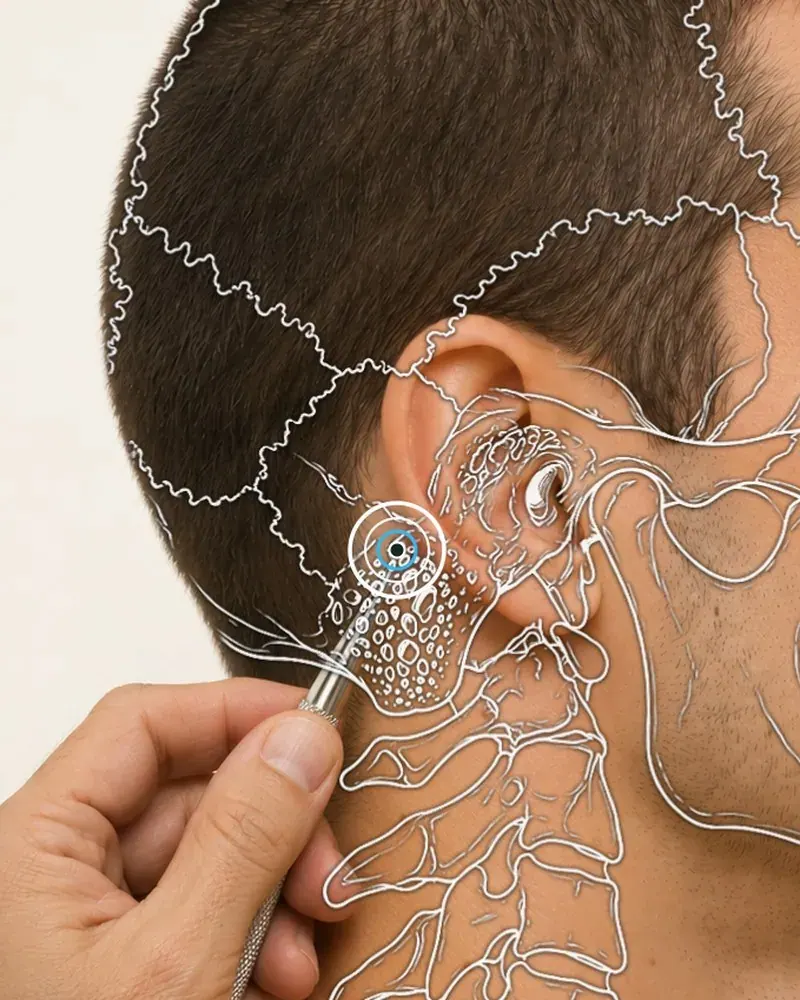
On the head, at the centre of the mastoid process, behind the ear.
According to the WHO (2008): On the head, at the center of the mastoid process, at the junction of the upper two thirds and lower one third of the curved line from TE17 to TE20.
How to find it, step by step
Three steps with photos, from an easy landmark to the exact point. Measurements are in cun, the width of the person's own thumb.
 TE17TE201
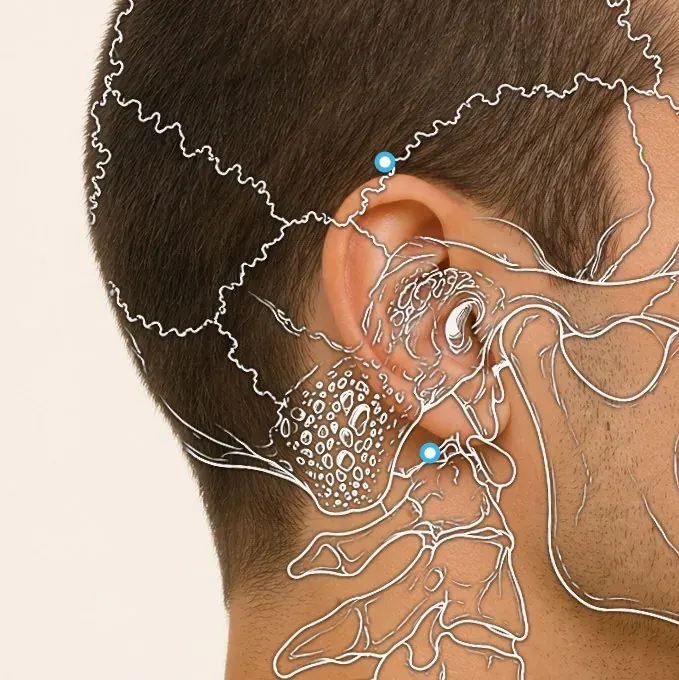
Find TE17 and TE20
TE17 is in the hollow behind the earlobe; TE20 is where the top tip of the ear touches the head.
 2
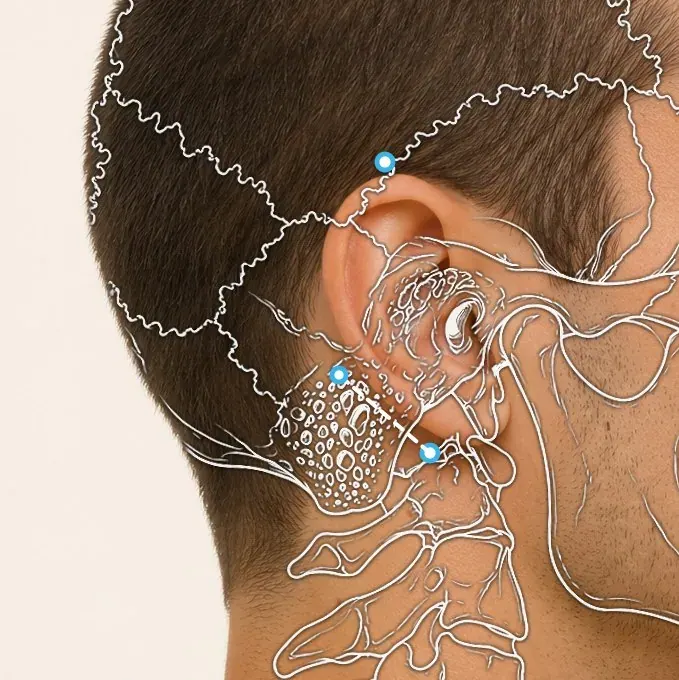
Follow the edge of the ear
Join the two behind the ear, following its edge. Chìmài is one third of the way from TE17, over the center of the mastoid bone.
 3
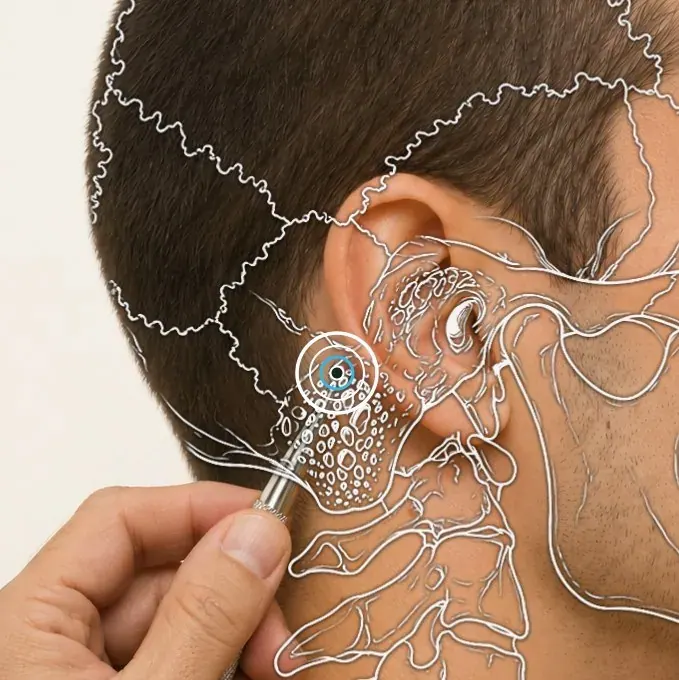
Press on the mastoid
Transverse and shallow; sometimes the vein that runs there is bled.
Functions according to tradition
Extinguishes internal Wind, calms infantile convulsions and benefits the ear.
Traditional indications
- Infantile convulsions
- Tinnitus
- Headache
- Vomiting
Indications described by tradition; they do not amount to proven clinical effectiveness for each one.
Precautions
- Needling depth
- 0.1–0.3 cun (shallow)
- Angle
- Transverse
Needling must always be done by a trained professional. At home, only gentle finger pressure.
Points on other channels with similar indications
They share several traditional indications with this point. Comparing them helps understand why one or the other is chosen.
- GB10 Fubai (Gallbladder): Headache, Tinnitus
- GB11 Touqiaoyin (Gallbladder): Headache, Tinnitus
- GB9 Tianchong (Gallbladder): Headache
- SI4 Wangu (Small Intestine): Headache, Tinnitus
- BL14 Jueyinshu (Bladder): Vomiting
- BL47 Hunmen (Bladder): Vomiting
Point profile
- Code
- TE18
- Pinyin name
- Chì Mài
- Characters
- 瘈脉
- Translation
- Spasm Vessel
- Meridian
- San Jiao (Triple Burner)
- Element
- Fire
- Topics
- Ear, Children, Mental
Health notice. Educational and study content. It describes concepts of Traditional Chinese Medicine and does not replace diagnosis or treatment by a healthcare professional. Needling, medicinal herbs and invasive techniques must be applied by trained professionals. Safety guide.
