The tongue: The coating
It changes in days: it speaks of now. 6 activities, about 14 minutes.
What to look at in the coating
Four questions, in this order: is there one, what colour, how thick, and is it evenly spread. Starting with colour is what makes people miss the most important of the four, which is the first.
- Is there one?
- its absence is the most reliable sign of yin deficiency
- Colour
- white is cold; yellow is heat
- Thickness
- thick means something is accumulating
- Distribution
- a bare area localises the problem
Common mistake: Looking only at the colour. An absent coating changes the whole diagnosis.
Flushes before dawn, night sweats, dry mouth and sipping thirst. What coating do you expect?
Urgent burning diarrhoea, dark urine, a sense of heaviness and strong breath. What coating?
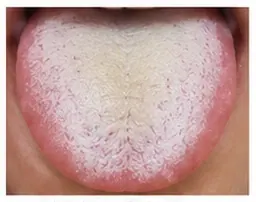
The greasy coating
It is the one that looks as if you could scrape it off with a spoon: dense, sticky and with an oily sheen. It signals damp or phlegm, and its thickness and colour say how much and of what nature.
- Greasy and white
- damp-cold or cold phlegm
- Greasy and yellow
- damp-heat or hot phlegm
- Greasy but thinning
- the treatment is working
- Greasy only at the root
- accumulation on the lower floor
Common mistake: Confusing it with an ordinary thick coating. What defines it is the sticky texture, not the depth.
What does each coating say?
- Thin, white, the body visible beneath it
- Thick, white and sticky
- Thick, yellow and dry
- Absent, the body shiny and smooth
- White, abundant and very wet
- Light, slightly more marked at the root
A pale body with a thick yellow coating. How do you read it?

Level complete!
Recorded. That standard is yours now.
Did you enjoy it? In the app you save your progress, review what you forget and unlock the 723 exercises.
Study content. The exercises describe concepts of Traditional Chinese Medicine; they are not medical advice.