Qǐ Jú Dì Huáng Wán
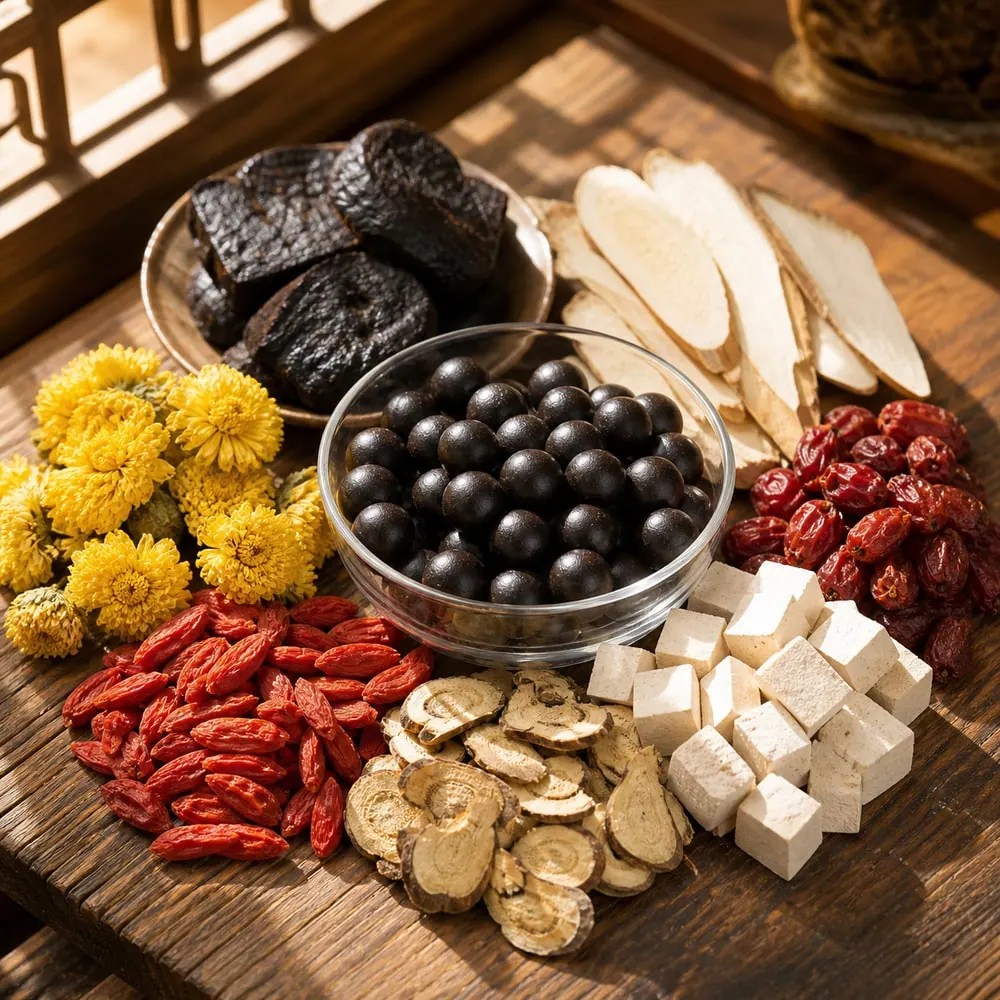
Qǐ Jú Dì Huáng Wán (杞菊地黄丸, “Lycium Fruit, Chrysanthemum and Rehmannia Pill”) comes from Yi Ji (Qing Dynasty). Nourishes Kidney and Liver Yin, benefits vision.
Main action
Nourishes Kidney and Liver Yin, benefits vision
Excellent for modern use given the impact of digital screens on the eyes. Nourishes the root (Kidney-Liver) while clearing the manifestation (eyes).
Indications
- Blurred vision
- Dry and tired eyes
- Photophobia
- Tears in the wind
- Dizziness
- Tinnitus
- Low back pain
- Tongue
- Red or pale-red, little coating
- Pulse
- Fine and fast, or weak in chi
Composition
| Herb | Role | Dose | Function |
|---|---|---|---|
| Shú Dì Huáng 熟地黄 | Emperor (君 jūn) | 24g | Nourishes Yin and Blood of Kidney and Liver |
| Shān Yào 山药 | Minister (臣 chén) | 12g | Tones Spleen and Kidney |
| Shān Zhū Yú 山茱萸 | Minister (臣 chén) | 12g | Nourishes Liver and Kidney |
| Fú Líng 茯苓 | Assistant (佐 zuǒ) | 9g | Strengthens Spleen |
| Zé Xiè 泽泻 | Assistant (佐 zuǒ) | 9g | Drains heat and humidity |
| Mǔ Dān Pí 牡丹皮 | Assistant (佐 zuǒ) | 9g | Cools Blood, drains empty heat from the Liver |
| Gǒu Qǐ Zǐ 枸杞子 | Minister (臣 chén) | 9g | Nourishes Yin of the Liver and Kidney, benefits vision |
| Jú Huā 菊花 | Minister (臣 chén) | 9g | Calms Liver Yang, clears vision, disperses wind-heat |
The emperor–minister–assistant–envoy hierarchy (君臣佐使) describes the role of each herb in the formula.
Preparation
Pill: 8-9g, 2-3 times/day. Decoction: boil 35 min
Current uses being studied
- Macular degeneration
- Digital eye strain
- Initial cataracts
- Hypertension with vertigo
- Dry eye syndrome
Precautions
- Do not use if there is Yang deficiency
- Avoid in damp-phlegm with thick coating
Formulas must be prescribed by qualified professionals; they can interact with medications.
Profile
- Chinese name
- 杞菊地黄丸
- English name
- Lycium Fruit, Chrysanthemum and Rehmannia Pill
- Source
- Yi Ji (Qing Dynasty)
- Dynasty
- Qing
- Category
- Nourish Yin
- Constitutions
- Yin Deficiency Constitution
Health notice. Educational and study content. It describes concepts of Traditional Chinese Medicine and does not replace diagnosis or treatment by a healthcare professional. Needling, medicinal herbs and invasive techniques must be applied by trained professionals. Safety guide.