The Five Elements: Wood, Fire, Earth, Metal and Water
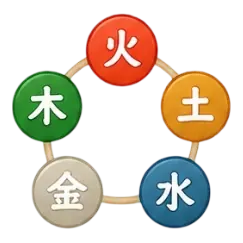
The five elements or five phases (wu xing) are Wood, Fire, Earth, Metal and Water, five categories that traditional Chinese medicine uses to relate organs, emotions, seasons, colors and flavors. They are linked to one another through a generating cycle (sheng), in which each element nourishes the next, and a controlling cycle (ke), in which each element restrains another.
Key points
- The five elements are Wood, Fire, Earth, Metal and Water; rather than substances, they are phases or processes of change.
- Each element is associated with a zang organ, a fu viscus, a season, a color, a flavor, an emotion, a sense organ, a tissue and a climate.
- In the generating cycle (sheng), each element nourishes the next, like a mother her child.
- In the controlling cycle (ke), each element restrains another to keep it from growing in excess.
- It is a traditional system of correspondences, useful for understanding the clinical reasoning of Chinese medicine, but without scientific validation as a model of the body.
Along with Yin and Yang, the theory of the five elements (五行, wǔ xíng) is one of the great frameworks of thought in traditional Chinese medicine. Wood, Fire, Earth, Metal and Water work as five categories that make it possible to organize nature and the human body into a system of correspondences, and to describe how the parts influence one another. On this page you will find the full chart of correspondences, the generating and controlling cycles, and how all of this is used in traditional practice.
What are the five elements or five phases?
Although the most widespread translation is "five elements," the Chinese term refers more to five phases or movements: processes of change rather than static materials. Wood evokes growth and expansion; Fire, peak activity; Earth, stability and transformation; Metal, condensation and withdrawal; and Water, rest and accumulation.
The theory developed in ancient Chinese philosophy and was integrated into medicine in texts such as the Huangdi Neijing. From then on, physicians used it to relate organs, emotions, seasons or flavors, and to reason about how an imbalance in one area can affect another.
Chart of five element correspondences
This is the most common chart of correspondences in Chinese medicine textbooks. The organs are understood in the traditional sense of the zang-fu organs, not the anatomical one.
| Element | Zang organ | Fu viscus | Season | Color | Flavor | Emotion | Sense / organ | Tissue | Climate |
|---|---|---|---|---|---|---|---|---|---|
| Wood (木, mù) | Liver | Gallbladder | Spring | Green | Sour | Anger | Eyes (sight) | Tendons | Wind |
| Fire (火, huǒ) | Heart | Small Intestine | Summer | Red | Bitter | Joy | Tongue (speech) | Blood vessels | Heat |
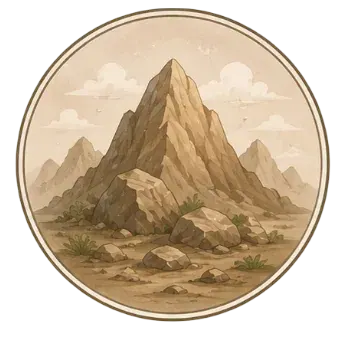
| Earth (土, tǔ) | Spleen | Stomach | Late summer | Yellow | Sweet | Worry | Mouth (taste) | Muscles | Dampness |
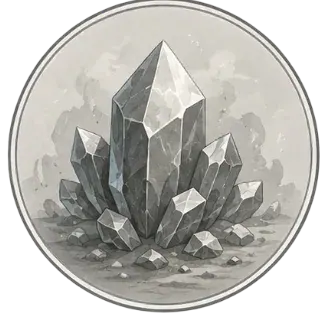
| Metal (金, jīn) | Lung | Large Intestine | Autumn | White | Pungent | Sadness | Nose (smell) | Skin | Dryness |
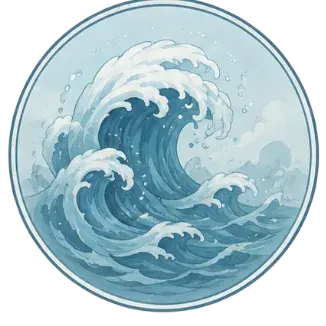
| Water (水, shuǐ) | Kidney | Bladder | Winter | Black | Salty | Fear | Ears (hearing) | Bones | Cold |
A few useful clarifications:
- Earth is associated with "late summer," an intermediate season. In other versions it is related to the last days of each season, as a phase of transition.
- The color of Wood, 青 (qīng), can be translated as green or blue-green.
- The emotion of Earth is usually translated as "worry" or "excessive pensiveness."
- In traditional theory, Fire also includes the Pericardium and the so-called Triple Burner, which completes the twelve organs and viscera associated with the meridians.
The generating cycle (sheng)
The generating cycle (相生, xiāng shēng) describes how each element nourishes and supports the next. It is usually explained with images from nature:
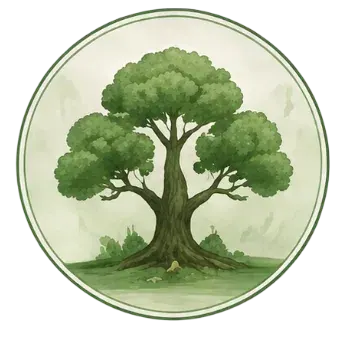
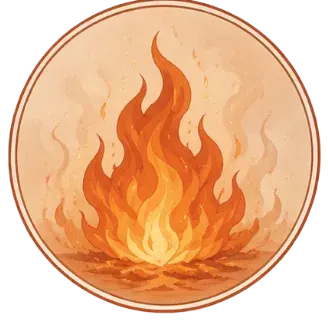
- Wood generates Fire, because wood burns.
- Fire generates Earth, because what burns turns into ash.
- Earth generates Metal, because metals are extracted from the earth.
- Metal generates Water, a traditional image related to condensation on metal surfaces.
- Water generates Wood, because water nourishes trees.
This relationship is also called the mother-child relationship: each element is the "mother" of the one it generates and the "child" of the one that generates it. In traditional clinical theory, a problem in the mother can affect the child and vice versa. For example, a weakness of the Kidney (Water) is considered able to affect the Liver (Wood).
The controlling cycle (ke)
The controlling or dominance cycle (相克, xiāng kè) describes how each element restrains another to keep it from growing in excess:
- Wood controls Earth, as roots hold the soil.
- Earth controls Water, as a dam holds back a river.
- Water controls Fire, because it puts it out.
- Fire controls Metal, because it melts it.
- Metal controls Wood, as an ax cuts down a tree.
Generation and control work at the same time: one provides growth and the other, limits. For Chinese medicine, health depends on both cycles staying in balance, in a logic parallel to that of Yin and Yang.
When the cycles are disturbed
The classical texts also describe two pathological forms of relationship. In overacting (乘, chéng), one element controls another excessively: it is said, for example, that a disturbed Liver "invades" the Spleen and affects digestion. In counteracting or insulting (侮, wǔ), the element that should be controlled rebels against the one that controls it, as when the Fire of the Heart is said to "dry up" the Water of the Kidney.
How are the five elements used in Chinese medicine?
In traditional practice, the five elements are used to:
- Guide diagnosis: a striking facial color, a preference for a particular flavor or a predominant emotion may suggest, according to tradition, which organ is involved. These signs are combined with those of the four diagnostic methods.
- Plan treatment: following the classical rule of "tonifying the mother" in deficiencies or "sedating the child" in excesses.
- Give lifestyle advice according to the season, something also reflected in Chinese dietary therapy and its five flavors.
What does science say about the five elements?
Five element theory is a symbolic system of correspondences, not a scientific model of the body. There is no evidence that the relationships among elements, organs, colors or emotions reflect biological mechanisms, and many present-day practitioners use it flexibly, combined with other traditional diagnostic systems.
Knowing it is useful for understanding the internal logic of Chinese medicine and its cultural richness. If you want to go deeper, we recommend the page on the vital substances, which completes the picture of the fundamentals. For any health problem, consult a health professional.
Frequently asked questions
What does wu xing mean?
Wu xing (五行) is usually translated as five elements, although many specialists prefer five phases or five movements. The character xing suggests walking or acting, so the original idea is one of processes in transformation rather than fixed materials. That is why they should not be confused with the four elements of Greek philosophy.
Which organ corresponds to each element?
According to tradition, Wood corresponds to the Liver and Gallbladder; Fire to the Heart and Small Intestine; Earth to the Spleen and Stomach; Metal to the Lung and Large Intestine; and Water to the Kidney and Bladder. Remember that these organs are understood as sets of functions and do not match those of anatomy exactly.
What is the difference between the sheng cycle and the ke cycle?
The sheng, or generating, cycle describes how each element nourishes and supports the next: Wood feeds Fire, Fire feeds Earth, and so on. The ke, or controlling, cycle describes how each element limits another: Wood controls Earth, Earth controls Water, Water controls Fire, Fire controls Metal and Metal controls Wood.
Can I find out my element to take care of my health?
Some schools describe constitutions associated with each element, but there is no reliable test to assign you one, and there is no scientific evidence that doing so improves health. It can be a tool for reflecting on your habits, but if you have symptoms or health concerns, the right step is to consult a health professional.
Health notice. This content is educational and describes concepts of Traditional Chinese Medicine together with the available scientific evidence. It does not replace diagnosis or treatment by a healthcare professional. If symptoms are persistent or severe, consult your doctor. Safety guide.