Chinese Dietary Therapy: The Nature of Foods and the Five Flavors
Chinese dietary therapy is the branch of traditional Chinese medicine that uses food to maintain health and balance. It classifies each food by its nature, from cold to hot, and by its flavor, and recommends adapting them to the person and the season; these categories are traditional and have not been scientifically validated.
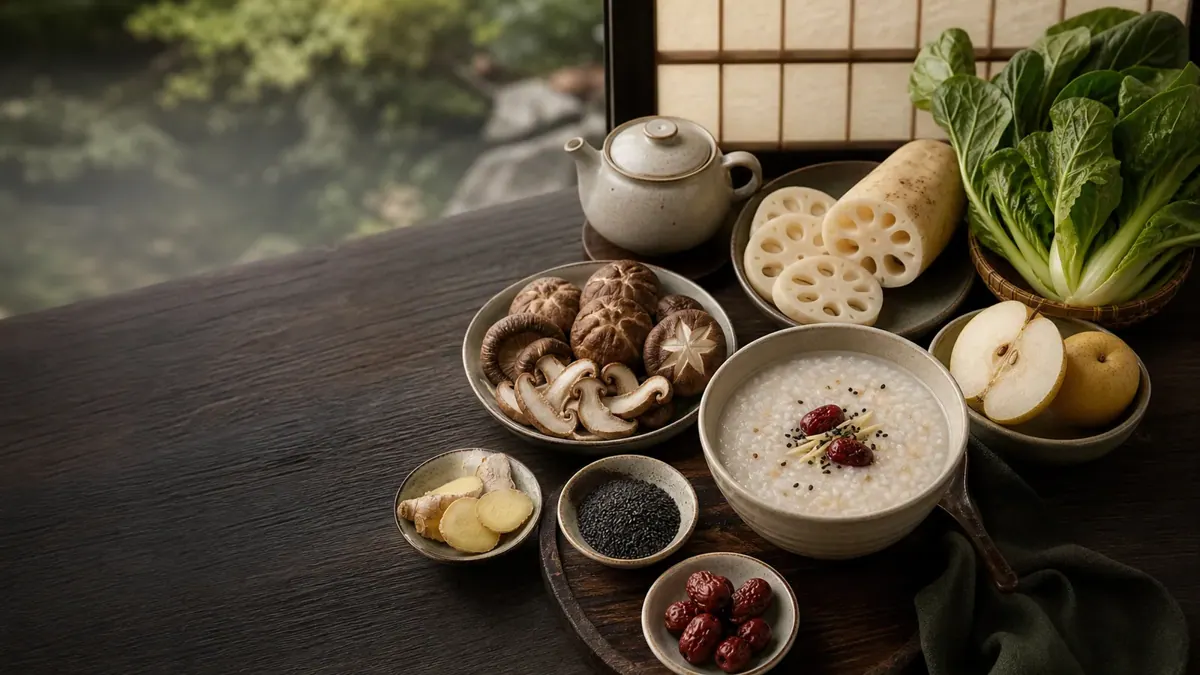
Key points
- Chinese dietary therapy holds that foods have a thermal nature: cold, cool, neutral, warm or hot.
- Each food is also associated with one or more of the five flavors: sour, bitter, sweet, pungent and salty.
- According to traditional theory, the flavors are related to the five elements and to specific organs.
- The central idea is to adapt eating to each person's constitution, to their condition and to the season of the year.
- Thermal nature and the flavors are traditional concepts without scientific validation.
- Much of the advice coincides with a healthy diet, but it does not replace advice from a doctor or a dietitian.
For traditional Chinese medicine, eating well is not just a matter of nutrients: each food is said to have a "nature" and a "flavor" capable of influencing the body's balance. This branch is known as shiliao (食疗, shí liáo), "food therapy," and in China it is part of everyday culture: many families choose soups, herbal teas or spices according to the season or to how they are feeling. On this page we explain its principles, with a table of the nature of foods and another of the five flavors, and we clearly distinguish what is traditional from what science supports.
What is Chinese dietary therapy?
Chinese dietary therapy applies to foods the same classification system as Chinese herbal medicine. In fact, the line between food and remedy is blurry in this tradition: ginger, jujube (Chinese date) and goji berries are used both in cooking and in formulas. The underlying principle is to maintain balance between yin and yang and to look after digestive function, which Chinese medicine attributes above all to the Spleen (脾, pí) and the Stomach (胃, wèi), two of the zang-fu organs.
According to tradition, a good diet should be adapted to three factors:
- The person: their constitution and condition (for example, someone who feels the cold easily or someone who tends toward heat).
- The season: more warm foods in winter and more cool ones in summer.
- The place: the climate one lives in.
The nature of foods: from cold to hot
The nature or temperature (性, xìng) of a food does not refer to whether it is served cold or hot, but to the effect attributed to it. Cool and cold foods are considered useful for "cooling" heat patterns; warm and hot ones, for "warming" cold patterns. Neutral foods are the balanced foundation of the diet.
| Nature | Traditional effect | Common examples |
|---|---|---|
| Cold | Cools strongly; associated with yin | Watermelon, banana, cucumber, seaweed, crab |
| Cool | Cools gently | Pear, tomato, celery, spinach, tofu, green tea |
| Neutral | Balanced; foundation of the diet | Rice, corn, potato, carrot, egg, pork |
| Warm | Warms gently | Fresh ginger, onion, chicken, lamb, jujube, walnut |
| Hot | Warms strongly; associated with yang | Cinnamon, pepper, chili pepper, dried ginger |
Specific classifications vary between texts and schools, and the cooking method also matters: according to tradition, roasting or frying "warms" a food, while steaming it or eating it raw makes it "cooler."
The five flavors and their relationship with the organs
Each food is also associated with one or more of the five flavors (五味, wǔ wèi). According to the theory of the five elements, each flavor is linked to an element and an organ, and a characteristic action is attributed to it.
| Flavor | Element | Organ | Traditional action | Examples |
|---|---|---|---|---|
| Sour (酸, suān) | Wood | Liver | Astringes and retains | Lemon, vinegar, plum |
| Bitter (苦, kǔ) | Fire | Heart | Dries and descends | Endive, artichoke, tea |
| Sweet (甘, gān) | Earth | Spleen | Tonifies, harmonizes and relaxes | Rice, pumpkin, sweet potato, honey |
| Pungent (辛, xīn) | Metal | Lung | Disperses and moves | Ginger, garlic, scallion, pepper |
| Salty (咸, xián) | Water | Kidney | Softens and moistens | Seaweed, salt, shellfish |
In the tradition, the "sweet" flavor does not refer to added sugar, but to the mild taste of grains, legumes and many vegetables. The classical recommendation is to include all the flavors in moderation, because an excess of any of them is considered to harm its associated organ.
Traditional advice from Chinese dietary therapy
Some general guidelines that are often repeated in the tradition:
- Eat at regular times and without rushing, chewing well.
- Give priority to cooked, warm and easy-to-digest foods, such as soups and stews.
- Limit raw foods, iced drinks, fried foods and very fatty foods.
- Do not overeat: tradition recommends finishing meals without feeling full.
- Adapt your diet to the season, with more warm foods in winter and more cool ones in summer.
What does the scientific evidence say?
The categories of thermal nature and the five flavors are traditional concepts based on observation and accumulated experience, but they have not been scientifically validated: there is no measurable property that corresponds to a food being "cold" or "hot," and the classifications differ between sources.
That said, many practical recommendations of Chinese dietary therapy coincide with what current nutrition advises: eating regularly, not overdoing it, giving a central role to grains, vegetables and legumes, preferring simple preparations and limiting fried foods, fats and sweets. That overlap does not prove the theory behind them, but it makes much of the advice reasonable. For an overview, see scientific evidence.
Safety and precautions
Applied with common sense, Chinese dietary therapy is usually safe, but some risks are worth keeping in mind:
- Overly restrictive diets. Eliminating entire food groups because they are considered "cold" or "hot" can lead to nutritional deficiencies, especially in children, pregnant women and older adults.
- Diseases that require a specific diet. In diabetes, kidney disease, celiac disease, allergies or eating disorders, diet should be planned with a doctor or a dietitian.
- Ingredients with medicinal activity. Some recipes include herbs that can interact with medications, as happens in herbal medicine; talk to your doctor if you take anticoagulants or other drugs.
- Exaggerated promises. Be wary of anyone who claims that a food or a diet cures serious diseases.
More recommendations in our safety guide.
Frequently asked questions
What does it mean for a food to be cold or hot in Chinese medicine?
It does not refer to the temperature at which it is served, but to the effect that tradition attributes to it on the body. A food of cold nature, such as watermelon, is considered cooling and useful in heat patterns; a hot one, such as cinnamon or chili pepper, is considered warming and stimulating. It is a traditional classification based on experience, not a scientific measurement.
Should you avoid cold drinks according to Chinese medicine?
Chinese tradition recommends limiting iced drinks and excessive raw food, because it considers that they weaken digestive function, which it attributes to the Spleen. There is no solid scientific evidence that cold water is harmful for healthy people. If you have digestive discomfort, the sensible approach is to notice what agrees with you and consult a health professional.
Can Chinese dietary therapy treat diseases?
Chinese dietary therapy is understood mainly as a way of looking after health and supporting other treatments. There is no evidence that its specific principles cure diseases. In conditions such as diabetes, kidney disease, food allergies or celiac disease, diet should be planned with a doctor or a dietitian, although tastes and culinary traditions can be respected.
Which foods are recommended in winter according to Chinese medicine?
In winter, tradition advises prioritizing foods of warm nature and long-cooked preparations, such as broths, stews and soups, with spices such as ginger or cinnamon, and limiting raw and cold foods. This advice is consistent with seasonal cooking, but you should always maintain a varied diet, with vegetables, fruit and legumes.
Health notice. This content is educational and describes concepts of Traditional Chinese Medicine together with the available scientific evidence. It does not replace diagnosis or treatment by a healthcare professional. If symptoms are persistent or severe, consult your doctor. Safety guide.