Weiyang (BL39)
Weiyang (BL39), “Bend Yang”, is a point on the Bladder meridian. It is point 39 of the 67 on the channel. Lower He-Sea of the Triple Energizer: regulates water and benefits urination.
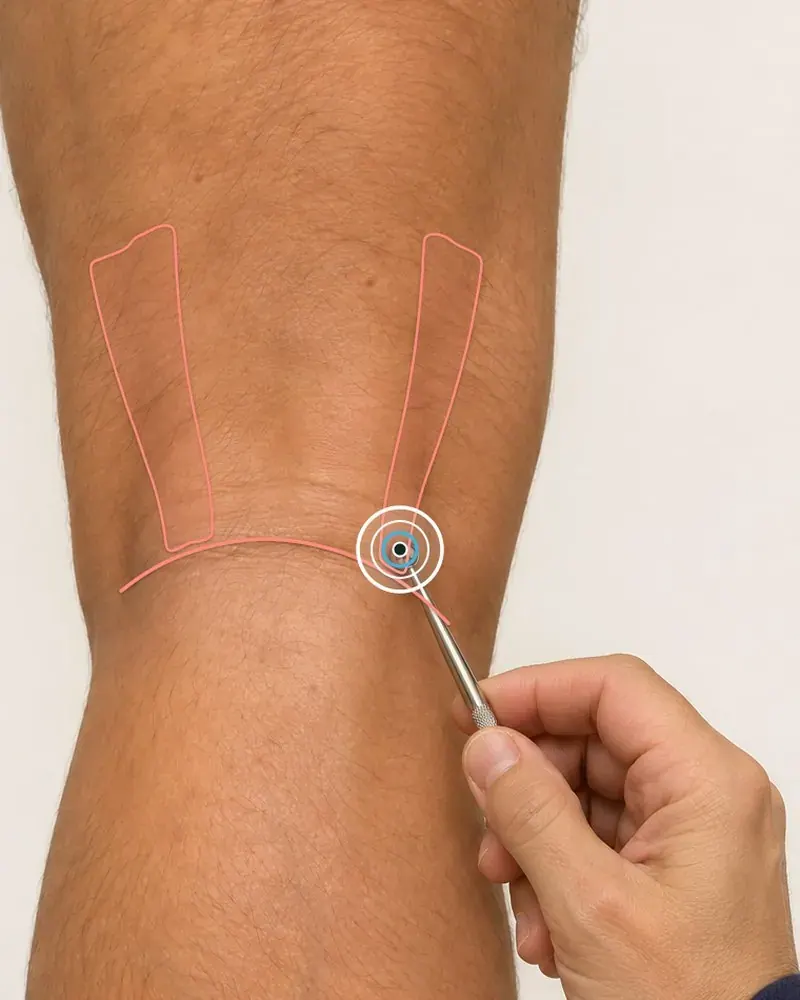
Location
On the posterolateral aspect of the knee, medial to the biceps femoris tendon, in the popliteal crease.
According to the WHO (2008): On the posterolateral aspect of the knee, just medial to the biceps femoris tendon, in the popliteal crease. Note: the biceps femoris tendon is more prominent with the knee slightly flexed.
How to find it, step by step
Three steps with photos, from an easy landmark to the exact point. Measurements are in cun, the width of the person's own thumb.
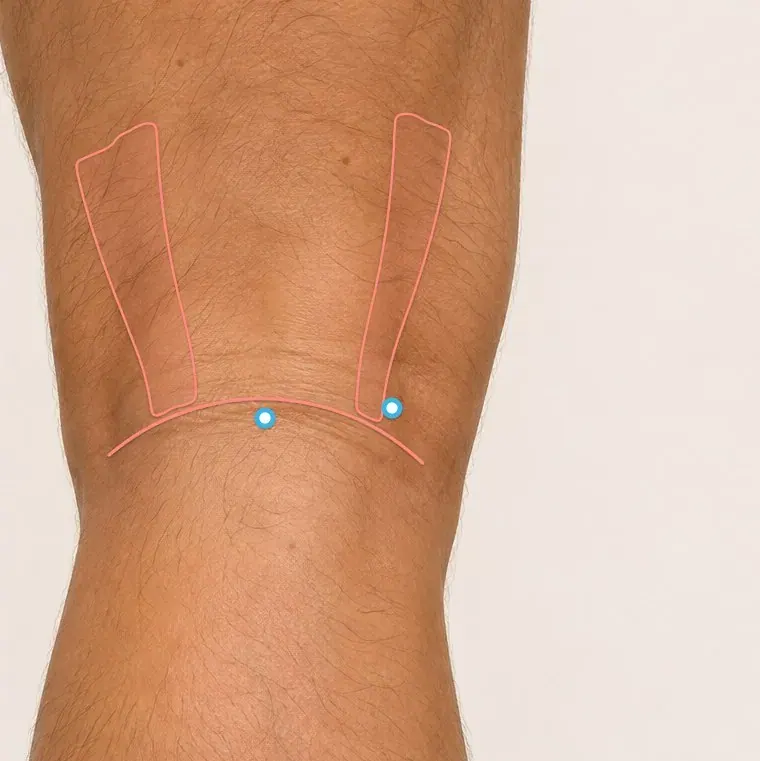 Popliteal crease (BL40)Biceps femoris tendon1
Find the crease behind the knee
Bend the knee slightly: the horizontal crease shows more clearly and, on its outer side, so does the biceps femoris tendon.
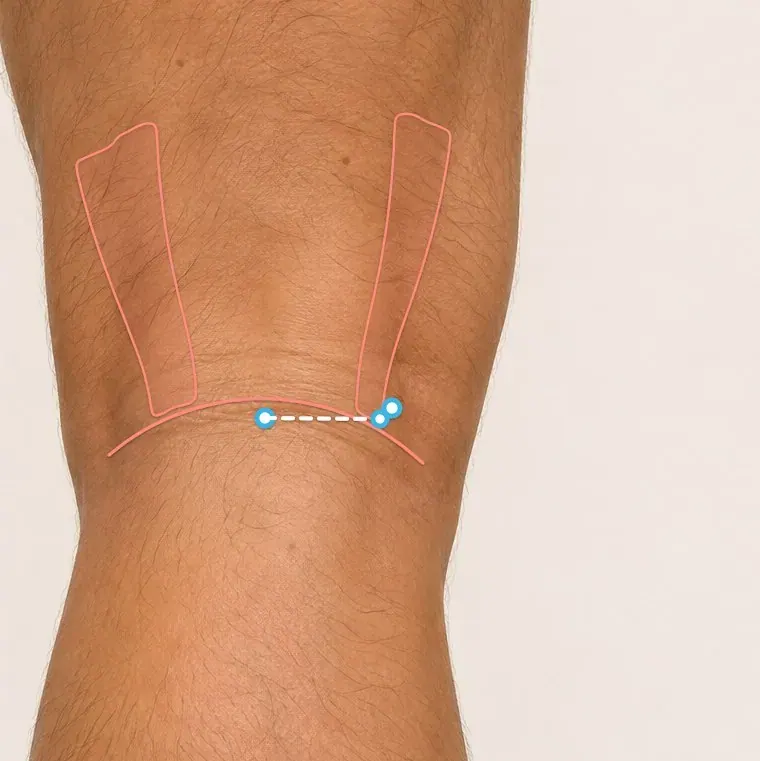 2
Go to the tendon
Follow the crease from the center (BL40) outward: Wěiyáng is just inside the tendon.
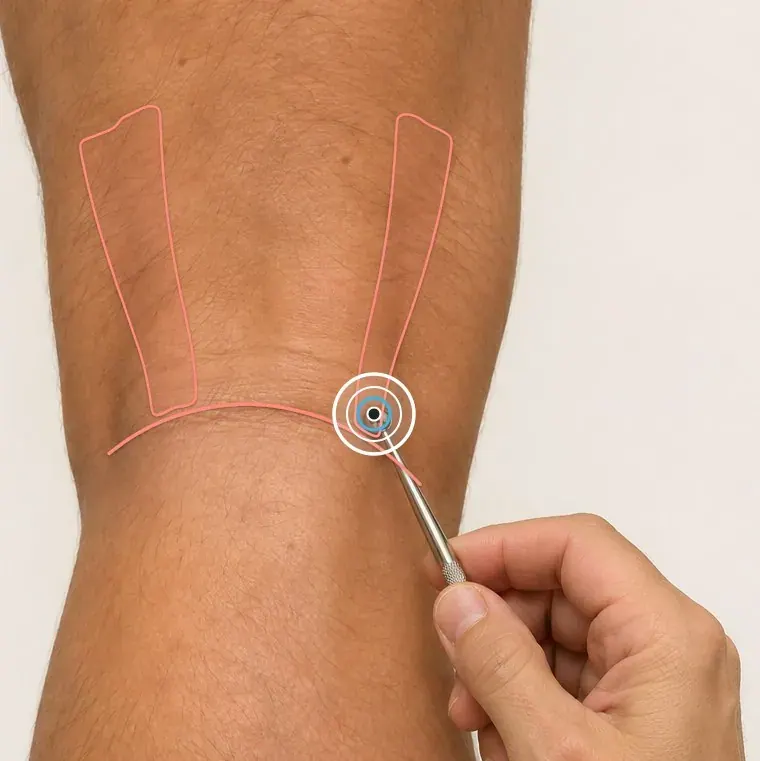 3
Press next to the tendon
Perpendicular.
Functions according to tradition
Lower He-Sea of the Triple Energizer: regulates water and benefits urination.
Traditional indications
- Urinary retention
- Oedema
- Lower back pain
- Leg contracture
Indications described by tradition; they do not amount to proven clinical effectiveness for each one.
What its classification means
Last of the transport points, near the elbow or knee: the Qi “goes deep” and joins the organ. It has been used for disorders of the fu organs and the Stomach.
Precautions
- Needling depth
- 1–1.5 cun
- Angle
- Perpendicular
Needling must always be done by a trained professional. At home, only gentle finger pressure.
Points on other channels with similar indications
They share several traditional indications with this point. Comparing them helps understand why one or the other is chosen.
- CV5 Shimen (Ren Mai (Conception Vessel)): Oedema, Urinary retention
- CV9 Shuifen (Ren Mai (Conception Vessel)): Oedema, Urinary retention
- ST28 Shuidao (Stomach): Oedema, Urinary retention
- GB25 Jingmen (Gallbladder): Lower back pain, Oedema
- CV2 Qugu (Ren Mai (Conception Vessel)): Urinary retention
- KI11 Henggu (Kidney): Urinary retention
Point profile
- Code
- BL39
- Pinyin name
- Wěi Yáng
- Characters
- 委阳
- Translation
- Bend Yang
- Meridian
- Bladder
- Element
- Water
- Classification
- He-Sea
- Topics
- Urination, Oedema, Knee
Health notice. Educational and study content. It describes concepts of Traditional Chinese Medicine and does not replace diagnosis or treatment by a healthcare professional. Needling, medicinal herbs and invasive techniques must be applied by trained professionals. Safety guide.