Fengchi (GB20)
Fengchi (GB20), “Wind Pool”, is a point on the Gallbladder meridian. It is point 20 of the 44 on the channel. The great point to expel external and internal Wind.
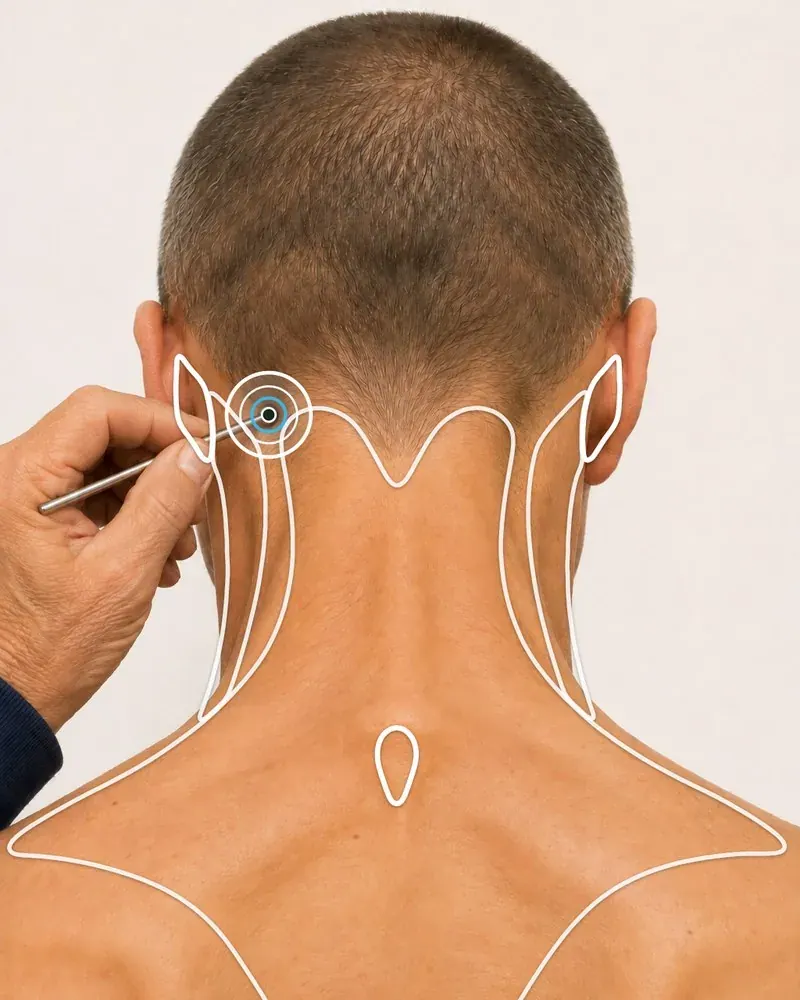
Location
In the depression between the sternocleidomastoid and trapezius muscles, at the level of the occiput.
According to the WHO (2008): Inferior to the occipital bone, in the depression between the origins of the sternocleidomastoid and the trapezius muscles, at the same level as GV16.
How to find it, step by step
Three steps with photos, from an easy landmark to the exact point. Measurements are in cun, the width of the person's own thumb.
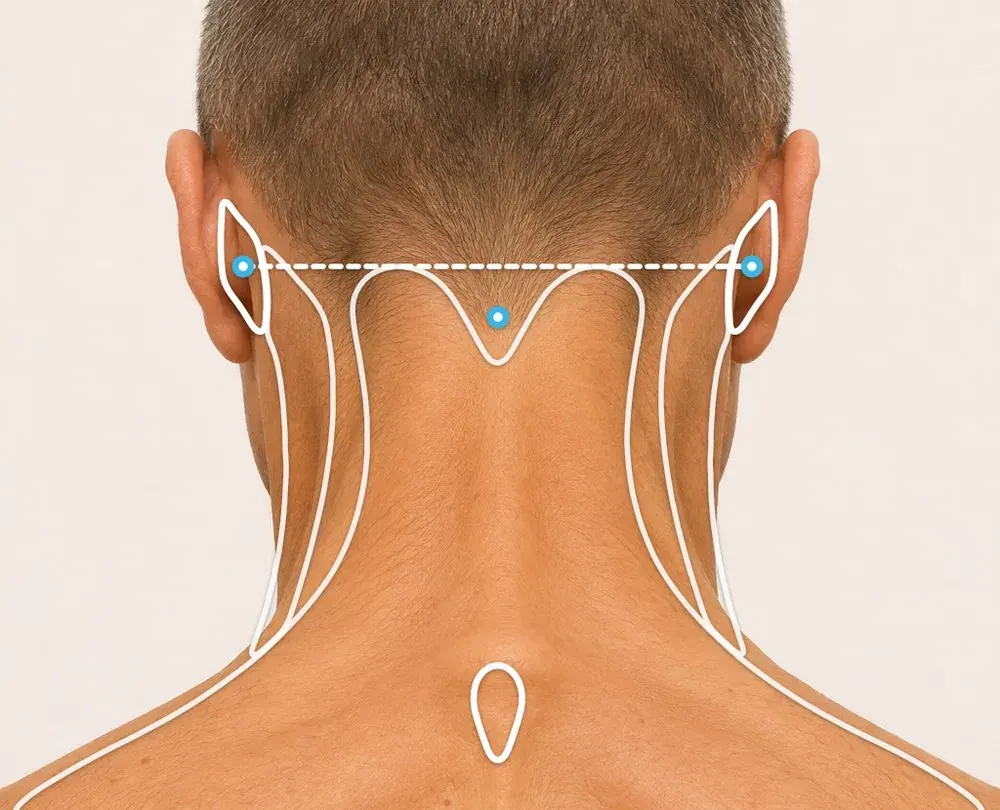 Between mastoids: 9 cunHairlineMastoid1
Take the measurement of the back of the neck
Between the two mastoids, the bony bumps behind the ears, is 9 cun. Also find the center of the hairline at the back of the neck.
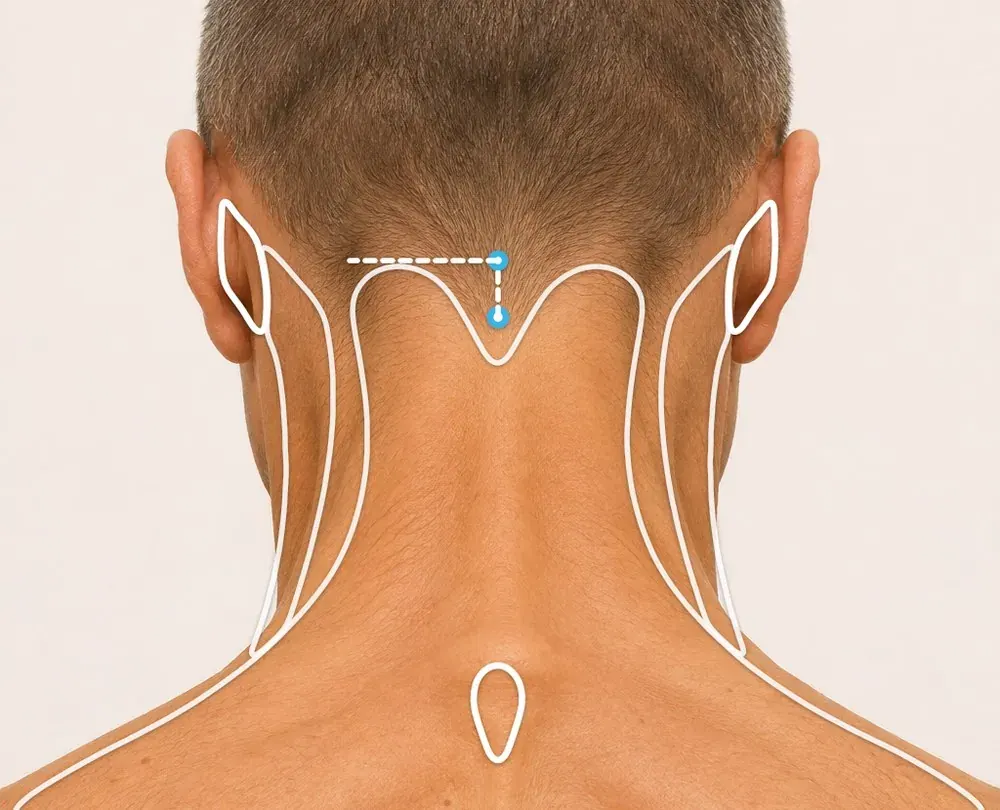 GV16 (1 cun above hairline)TrapeziusSternocleidomastoid2
Go up to the level of GV16 and move outward
From the center of the hairline, go up to the edge of the occipital bone (about 1 cun). At that level, move outward to the hollow between the trapezius and the sternocleidomastoid.
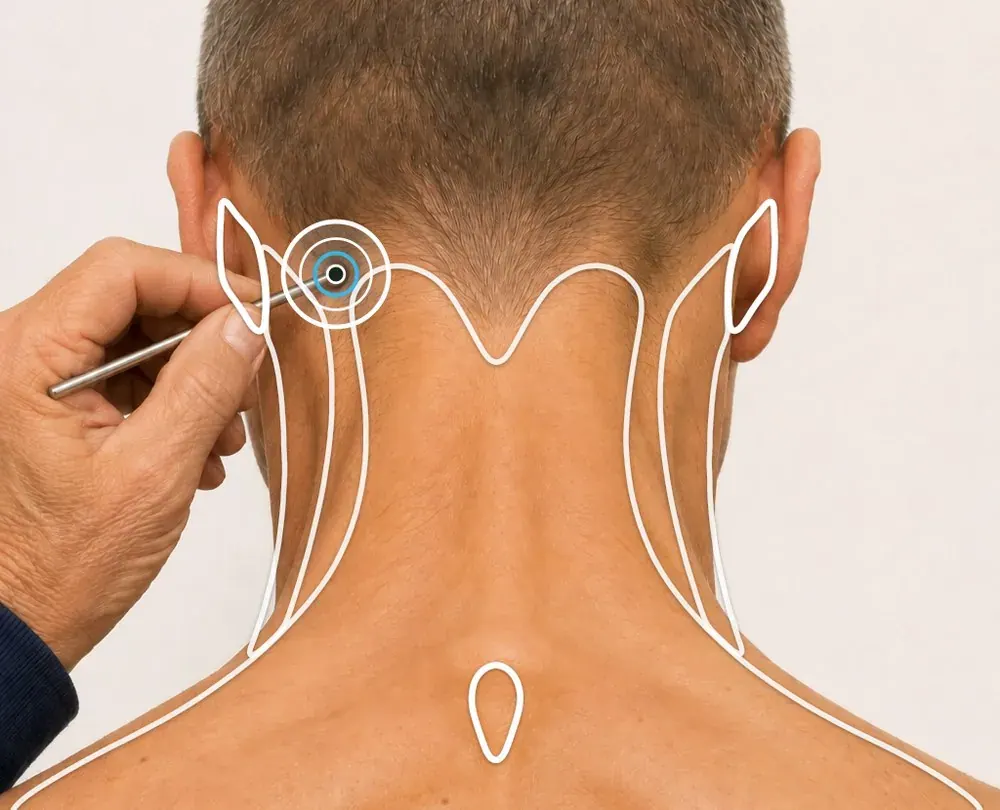 3
Press in the hollow below the skull
When you press you feel a deep depression, just below the bone. It is needled toward the tip of the nose.
Functions according to tradition
The great point to expel external and internal Wind. Benefits eyes and ears, clears the head, treats Wind-Heat and Wind-Cold.
Traditional indications
- Occipital headache
- Neck stiffness
- Cold and flu
- Vertigo
- Visual problems
- Hypertension
Indications described by tradition; they do not amount to proven clinical effectiveness for each one.
What its classification means
Two or more channels meet here, so it is credited with acting on all of them.
Precautions
Never needle upward or deeply: risk of reaching the medulla oblongata. Direct toward the tip of the nose or the opposite eye, never toward the ear on the other side.
- Needling depth
- 0.5–1 cun (oblique)
- Angle
- Oblique, toward the nose
Needling must always be done by a trained professional. At home, only gentle finger pressure.
Points on other channels with similar indications
They share several traditional indications with this point. Comparing them helps understand why one or the other is chosen.
- BL10 Tianzhu (Bladder): Neck stiffness, Occipital headache, Vertigo
- GV16 Fengfu (Du Mai (Governing Vessel)): Neck stiffness, Occipital headache, Vertigo
- BL65 Shugu (Bladder): Neck stiffness, Occipital headache
- BL9 Yuzhen (Bladder): Neck stiffness, Occipital headache
- DU14 Dazhui (Du Mai (Governing Vessel)): Hypertension, Neck stiffness
- GV15 Yamen (Du Mai (Governing Vessel)): Neck stiffness, Occipital headache
Point profile
- Code
- GB20
- Pinyin name
- Fēng Chí
- Characters
- 风池
- Translation
- Wind Pool
- Meridian
- Gallbladder
- Element
- Wood
- Classification
- Crossing point
- Topics
- Wind, Headache, Neck
Health notice. Educational and study content. It describes concepts of Traditional Chinese Medicine and does not replace diagnosis or treatment by a healthcare professional. Needling, medicinal herbs and invasive techniques must be applied by trained professionals. Safety guide.
