Hé Huān Pí · Albizzia Bark
Hé Huān Pí (合欢皮, Albizzia Bark) is a herb of Neutral nature and Sweet flavor, in the “Spirit-calming herbs” category. Tradition uses it to calm the spirit and relieve depression, Activate blood and reduce swelling, Harmonize the heart.
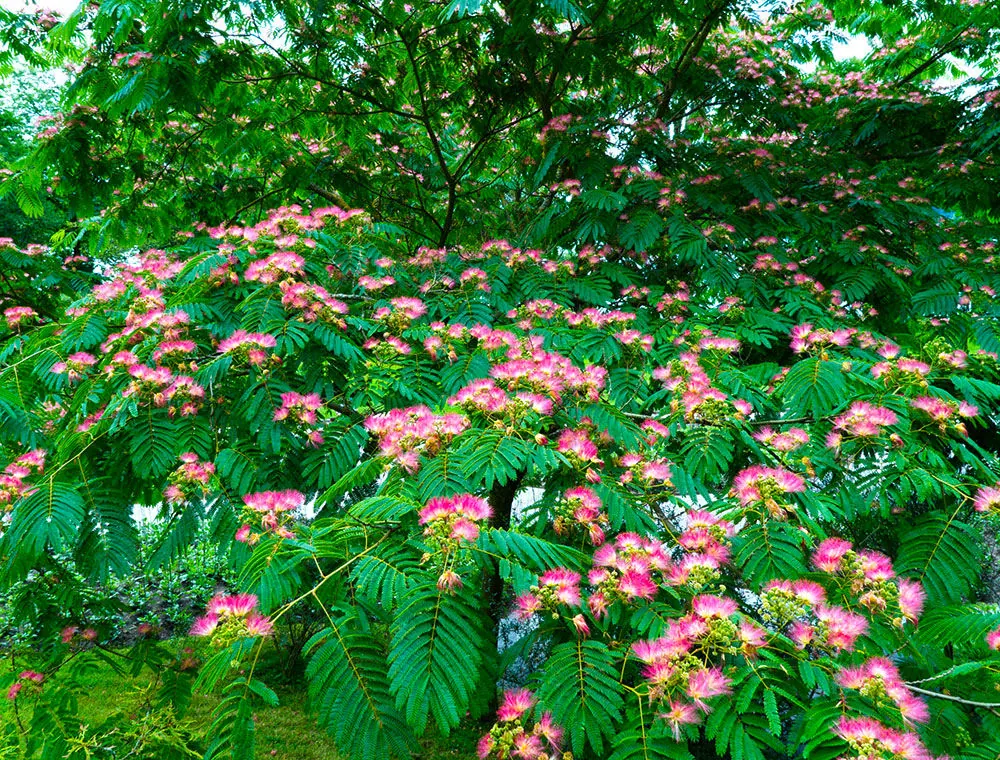
Energetic profile
- Pinyin name
- Hé Huān Pí
- Characters
- 合欢皮
- Botanical name
- Albizia julibrissin Durazz.
- Family
- Fabaceae
- Part used
- Bark
- Nature
- Neutral
- Flavor
- Sweet
- Meridians
- Heart, Liver
- Category
- Spirit-calming herbs
- Toxicity
- Non-toxic
- Pregnancy
- Caution
- Origin
- China, Iran, Japan
Actions according to tradition
- Calm the spirit and relieve depression
- Activate blood and reduce swelling
- Harmonize the heart
Traditional uses
- Insomnia with irritability due to Liver Qi stagnation
- Depression and melancholy
- Trauma with bruises
- Abscesses and skin ulcers
- Palpitations with chest distention
Studied effects and current applications
- Calms anxiety, insomnia and irritability
- Improves mood in depression due to Liver Qi stagnation
- Reduces pain and swelling from trauma
- Moderate anxiolytic properties
Applications under investigation
- Anxiety disorders
- Insomnio
- Mild to moderate depression
- Lesiones por traumatismo
- chronic stress
An effect being investigated does not mean it has been proven in humans.
Contraindications and adverse effects
Absolute contraindications
- None known with certainty
Relative contraindications
- Pregnancy (insufficient data)
- Excess damp-heat without Qi stagnation
- Pregnancy
- Insufficient data on pregnancy. Use with caution only if necessary.
- Breastfeeding
- Insufficient data. Use with caution.
- Children
- Use with caution in children. Limited data.
- Older adults
- Generally well tolerated in elderly people with insomnia and anxiety.
Possible adverse effects
- Somnolencia leve
- Occasional gastric discomfort
When to stop
- Somnolencia excesiva
- Pregnancy
Interactions with medications
| Group | Drugs | Severity | Effect and recommendation |
|---|---|---|---|
| Sedatives and hypnotics | Benzodiazepinas, Zolpidem | Mild | Possible additive sedative effect Monitor sedation level. |
With other herbs
- suan_zao_ren Complementary spirit calming effects
Reference dose
- Decoction
- 6-12 g daily
- Powder
- 3-6 g daily
- Acute use
- 2-4 weeks
- Chronic use
- 1-2 months
- Maximum
- Prolonged use with supervision
- Children
- Use with caution in children. Limited data in pediatrics.
Forms of preparation
Boil 6-12g in 3 cups of water for 30-45 min. Drink warm.
Anxiety, depression, insomnia
Macerate 30g in rice wine for 2-4 weeks. Take 1-2 teaspoons daily.
Injuries and bruises
Approximate doses from the literature; they are not a prescription. Consult a professional.
Active compounds
Flavonoids (formononetin, quercetin) and triterpenes (julibroside)
Triterpene saponins · Anxiolytic, sedative, anti-inflammatory
Modulation of GABA-A and serotonin 5-HT1A receptors · 0.2-0.8%
Isoflavones and phenylpropanoids · Neuroprotective, anxiolytic, anti-inflammatory
HPA axis modulation, NF-κB inhibition · 0.1-0.5%
Flavonoids · Antioxidant, anti-inflammatory, vascular protector
Free radical scavenging, COX-2 inhibition · 0.5-1.5%
Triterpenes · Anti-inflammatory, analgesic
COX-2 and 5-LOX inhibition · 0.1-0.3%
Harvesting and processing
- Harvest
- Summer (June-August), during flowering
Bark collected from young branches in summer. The bark is removed, cut into strips and dried in the sun. Summer bark has higher flavonoid content.
Bark from young branches peeled, cut into 3-5 mm strips and dried.
Health notice. Educational and study content. It describes concepts of Traditional Chinese Medicine and does not replace diagnosis or treatment by a healthcare professional. Needling, medicinal herbs and invasive techniques must be applied by trained professionals. Safety guide.