Zhongdu (GB32)
Zhongdu (GB32), “Central River”, is a point on the Gallbladder meridian. It is point 32 of the 44 on the channel. Dispels Wind-Damp from the thigh and frees the channel.
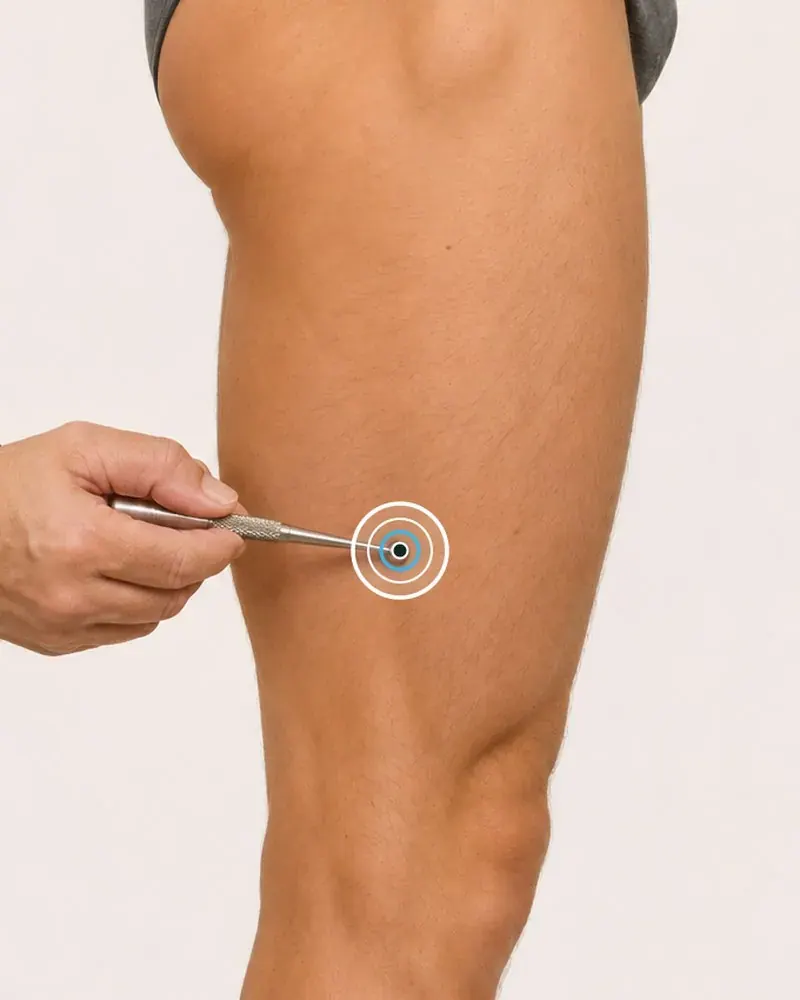
Location
On the lateral aspect of the thigh, posterior to the iliotibial band, 7 cun above the popliteal crease.
According to the WHO (2008): On the lateral aspect of the thigh, posterior to the iliotibial band, 7 B-cun superior to the popliteal crease.
How to find it, step by step
Three steps with photos, from an easy landmark to the exact point. Measurements are in cun, the width of the person's own thumb.
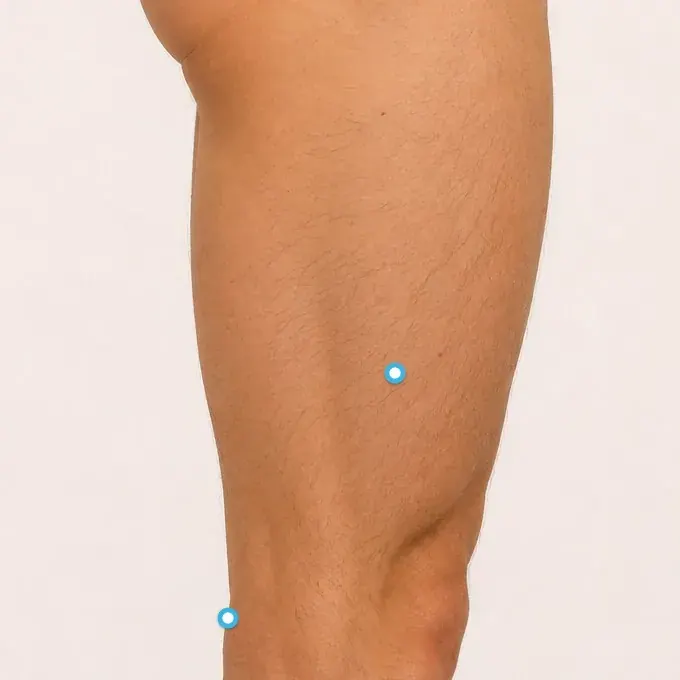 Popliteal creaseIliotibial band1
Find the iliotibial band
Standing, the band is the taut strip on the outer side of the thigh; it shows better when you push the thigh outward.
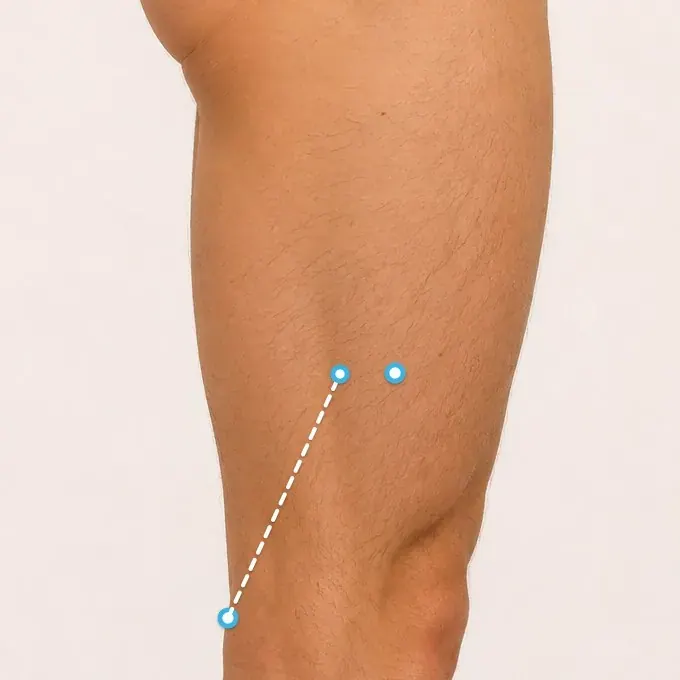 2
Measure from the knee
From the crease behind the knee, go up 7 cun (from the greater trochanter to the crease is 19). Zhōngdú is at that level, just behind the band. (Texts prior to 2008 place it at 5 cun, and GB31 at 7.)
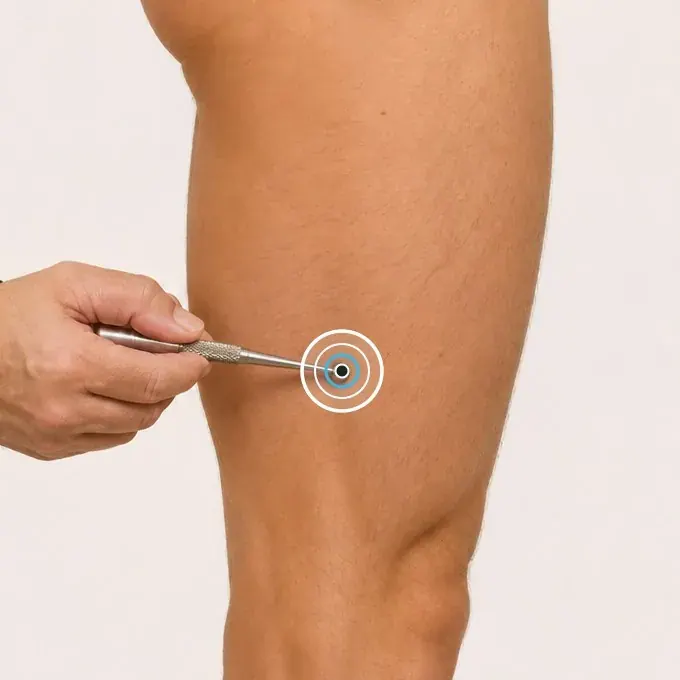 3
Press behind the band
Perpendicular.
Functions according to tradition
Dispels Wind-Damp from the thigh and frees the channel.
Traditional indications
- Thigh pain and numbness
- Hemiplegia
- Knee pain
- Sciatica
Indications described by tradition; they do not amount to proven clinical effectiveness for each one.
Precautions
- Needling depth
- 1–2 cun
- Angle
- Perpendicular
Needling must always be done by a trained professional. At home, only gentle finger pressure.
Points on other channels with similar indications
They share several traditional indications with this point. Comparing them helps understand why one or the other is chosen.
- BL37 Yinmen (Bladder): Sciatica
- BL38 Fuxi (Bladder): Knee pain
- BL57 Chengshan (Bladder): Sciatica
- GV3 Yaoyangguan (Du Mai (Governing Vessel)): Sciatica
- LI9 Shanglian (Large Intestine): Hemiplegia
- LV7 Xiguan (Liver): Knee pain
Point profile
- Code
- GB32
- Pinyin name
- Zhōng Dú
- Characters
- 中渎
- Translation
- Central River
- Meridian
- Gallbladder
- Element
- Wood
- Topics
- Leg, Thigh, Pain
Health notice. Educational and study content. It describes concepts of Traditional Chinese Medicine and does not replace diagnosis or treatment by a healthcare professional. Needling, medicinal herbs and invasive techniques must be applied by trained professionals. Safety guide.
