Yinlingquan (SP9)
Yinlingquan (SP9), “Yin Mound Spring”, is a point on the Spleen meridian. It is point 9 of the 21 on the channel. Transforms Dampness, strengthens Spleen, regulates the urinary bladder, treats knee diseases.
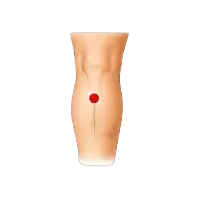
Location
In the depression posterior and inferior to the medial condyle of the tibia.
Functions according to tradition
Transforms Dampness, strengthens Spleen, regulates the urinary bladder, treats knee diseases.
Traditional indications
- Fluid retention
- Knee pain
- Abdominal distension
- Diarrhea
- Urinary incontinence
Indications described by tradition; they do not amount to proven clinical effectiveness for each one.
What its classification means
Last of the transport points, near the elbow or knee: the Qi “goes deep” and joins the organ. It has been used for disorders of the fu organs and the Stomach.
Precautions
No specific contraindications. Avoid excessive deep needling over the medial surface of the tibia.
Points on other channels with similar indications
They share several traditional indications with this point. Comparing them helps understand why one or the other is chosen.
- CV12 Zhongwan (Ren Mai (Conception Vessel)): Abdominal distension, Diarrhea
- ST25 Tianshu (Stomach): Abdominal distension, Diarrhea
- ST36 Zusanli (Stomach): Diarrhea, Knee pain
- BL25 Dachangshu (Bladder): Abdominal distension, Diarrhea
- BL20 Pishu (Bladder): Abdominal distension
- BL22 Sanjiaoshu (Bladder): Abdominal distension
Point profile
- Code
- SP9
- Pinyin name
- Yīn Líng Quán
- Characters
- 阴陵泉
- Translation
- Yin Mound Spring
- Meridian
- Spleen
- Element
- Earth
- Classification
- He-Sea
- Topics
- Dampness, Digestion, Knee
Health notice. Educational and study content. It describes concepts of Traditional Chinese Medicine and does not replace diagnosis or treatment by a healthcare professional. Needling, medicinal herbs and invasive techniques must be applied by trained professionals. Safety guide.