
“I get dizzy several times a week and my head throbs in the afternoons.”
Dizziness and temple pain
The episodes recur several times a week and are beginning to shape her afternoons and daily activity.
- Patient
- Woman, 61
- Occupation
- Retired; cares for her mother in the mornings
- Medication
- Antihypertensive for four years, followed by cardiology
- Allergies
- Penicillin allergy
- History
- Menopause at 51. No recent admissions or surgery.
- Habits
- Sleeps five or six hours. A glass of wine with lunch.
- Vitals
- Home readings last week: a little high in the afternoons
1 · The consultation
You have 18 minutes. Each question or examination costs 2. Choose carefully what to ask.
Questions
Examination
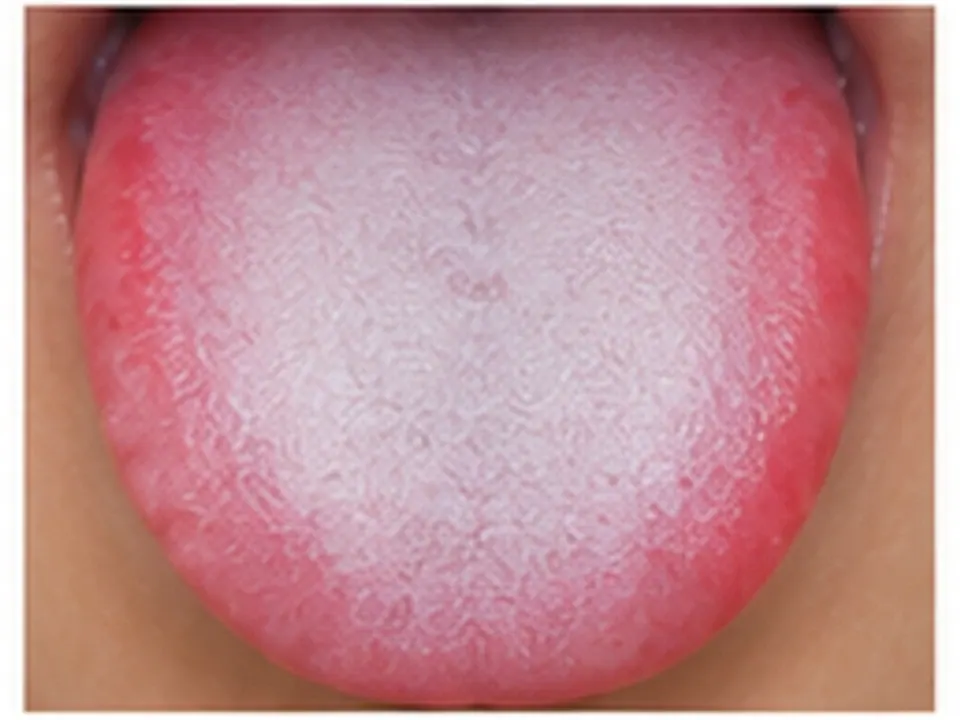
2 · The tongue
3 · The pulse
Describe the pulse on each axis.
4 · The pattern
5 · Differential diagnosis
You're torn between two patterns. Which is it?
Which finding decides it?
6 · Case twist
Patient update“I forgot to mention I have taken blood-pressure tablets for six years. My cardiologist checks them and it is well controlled.”
Mark the warning signs present:
What do you do?
7 · The treatment
Principle
Strategy
Points (choose 4)

Case solved
Reasoned solution
Pattern: Liver Yang rising. Supporting signs: Throbbing temporal headache, Dizziness worse with anger, Red eyes and light sleep, Flushed face, Wiry, forceful pulse.
The deciding clue: Wiry and forceful: Taut and straight, and it keeps its force under pressure. Not a deficiency..
Safety: Correct. You treat and you coordinate: the prescription belongs to whoever wrote it, and an improvement is good news worth reporting. What is never your place is suggesting she stop it.
Treatment: Subdue Liver Yang and clear the head, Nourish the Yin below, which is what stopped holding it down; Distal points below the knee, which is where you bring things down, A short local point at the nape, without insisting. Points: LV3, GB20, KI3, GB34.
More patients are waiting in the app, with voice, a real timer and a history of your decisions.
See the solution without playing
Pattern: Liver Yang rising. Supporting signs: Throbbing temporal headache, Dizziness worse with anger, Red eyes and light sleep, Flushed face, Wiry, forceful pulse.
The deciding clue: Wiry and forceful: Taut and straight, and it keeps its force under pressure. Not a deficiency..
Safety: Correct. You treat and you coordinate: the prescription belongs to whoever wrote it, and an improvement is good news worth reporting. What is never your place is suggesting she stop it.
Treatment: Subdue Liver Yang and clear the head, Nourish the Yin below, which is what stopped holding it down; Distal points below the knee, which is where you bring things down, A short local point at the nape, without insisting. Points: LV3, GB20, KI3, GB34.
Teaching case. Fictional patient for study purposes. If you have real symptoms, consult a healthcare professional.