Headache Relief
Release tension and wind headaches with key points
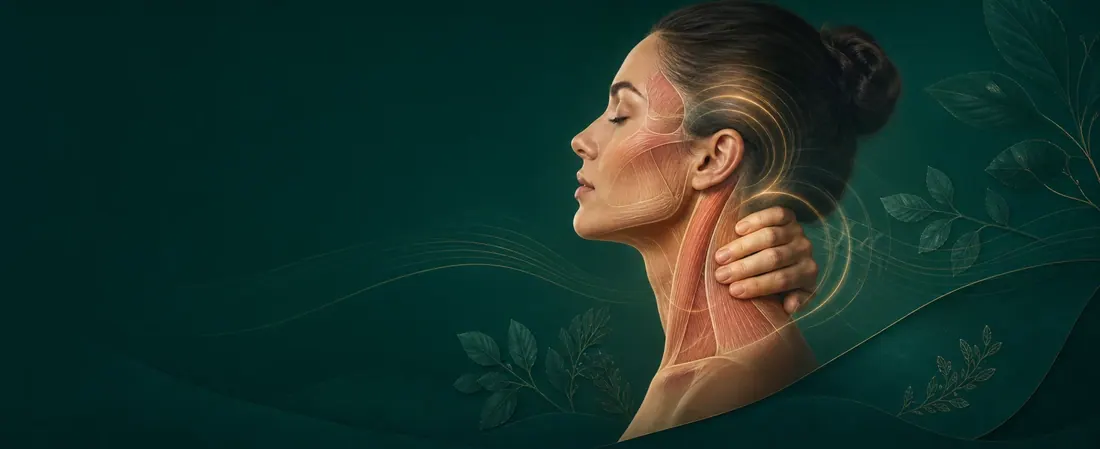
Headache Protocol
Combination of Hegu (LI-4), Fengchi (GB-20) and Taiyang to disperse wind, release exterior and relieve tension causing headaches. Effective for tension and wind-cold headaches.
Benefits attributed to it
- Relieves tension headaches
- Reduces cervical contracture pain
- Disperses wind and releases exterior
- Improves cranial circulation
- Reduces temple and nape pressure
Headaches in Chinese Medicine
Headaches often due to wind (external or internal), Qi or blood stagnation, or Yang rising. LI-4 and GB-20 are masters for expelling wind and releasing the head.
Wind can 'attack' the head causing pain. Head and neck points disperse this wind.
Yuan point of Large Intestine. Master for face and head. Expels wind, regulates Qi.
'Wind Pool'. Key point to disperse head wind. In nape between SCM and trapezius.
Step by step
Hegu (LI-4) Bilateral
LI-4 is the most used point for headaches for its strong wind-expelling effect.
- Duration
- 1 minute total
- Apply on both hands
- Hold 30-45 seconds per hand
- Combine with deep breathing
Fengchi (GB-20) Bilateral
GB-20 is in the nape. Disperses head wind, relaxes cervical muscles.
- Duration
- 2 minutes
- Use both thumbs simultaneously
- Tilt head slightly forward
- Don't force if sharp pain
Taiyang (太阳) and Temple Massage
Taiyang on temples disperses local heat and wind.
- Duration
- 2 minutes
- Work both sides
- Close eyes during application
After Protocol
- Rest 5 minutes in darkness
- Hydrate well
- Avoid screens if headache was from visual tension
Contraindications
- Avoid LI-4 in pregnancy
- GB-20 caution with severe hypertension
- Do not apply with intracranial hemorrhage
Health notice. Educational and study content. It describes concepts of Traditional Chinese Medicine and does not replace diagnosis or treatment by a healthcare professional. Needling, medicinal herbs and invasive techniques must be applied by trained professionals. Safety guide.