Chinese dietetics: Reading a food
Not good or bad: inside what. 5 activities, about 11 minutes.
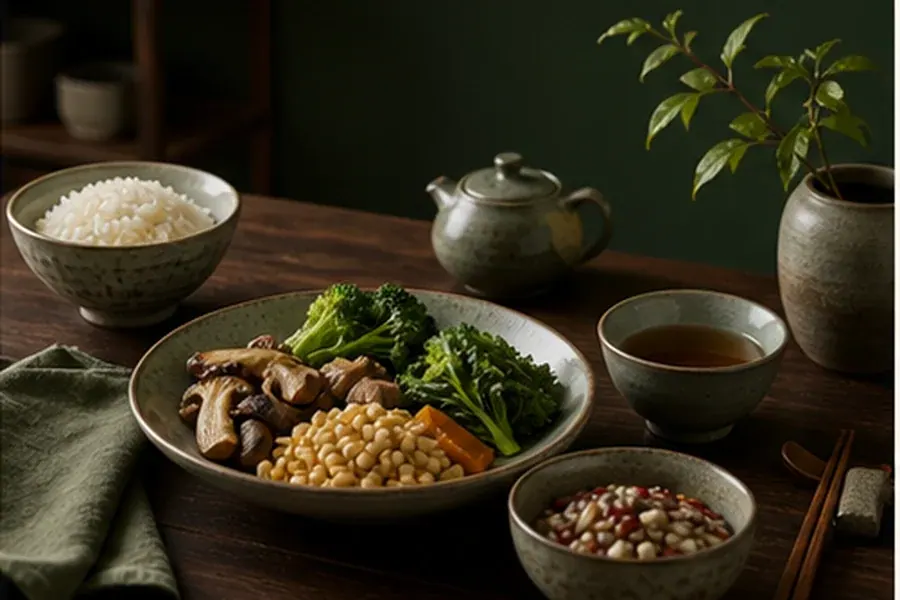
Nothing is classified on its own
食疗 Shí Liáo
Chinese dietetics does not sort foods into good and bad. It reads each one inside three things: the meal it belongs to, the climate it is eaten in, and the person eating it. Change one of the three and the reading changes with it.
- “Melon is bad”
- Says nothing: with what, when and for whom is missing
- “Melon alone, on an empty stomach, in January”
- That is a reading, and it can be argued with
- The same dish in August and in January
- Two different readings of the same dish
Common mistake: Looking for the list of forbidden foods. It is the first thing everyone asks for and it is exactly what this subject does not have.
Four categories, and what they are not
Tradition describes a food by thermal nature, flavor, direction and organ affinity. These are observation categories accumulated over centuries, not measurements: nature is not a thermometer and flavor is not always what the tongue notices.
- Thermal nature
- Which way the observed effect tends: cooling or warming
- Flavor
- The category it is filed under, sometimes inherited from the text
- Direction
- Whether the described effect rises, descends, releases or gathers
- Affinity
- Which organs tradition relates it to
Common mistake: Inferring a treatment from a single property. Four categories exist because one is not enough.
A patient asks whether bananas are good or bad. Which answer is Chinese dietetics?
Someone wants to drop five food families because they have read that they are “cold”. What do you tell them?
Each category with what it describes

Level complete!
Block finished. Let it rest, and tomorrow it will taste better.
Did you enjoy it? In the app you save your progress, review what you forget and unlock the 723 exercises.
Study content. The exercises describe concepts of Traditional Chinese Medicine; they are not medical advice.