Chinese dietetics: Thermal nature
It is not the temperature of the dish. 6 activities, about 12 minutes.
A scale of five, with a crowded middle
四气 Sì Qì
Cold, cool, neutral, warm and hot. What matters is where the majority sits: almost everything eaten daily is neutral or one step from the center. The extremes are few, and that is why they are noticeable.
- Neutral
- Rice, egg, carrot: the back of the pantry
- Cool / cold
- Cucumber, watermelon, tofu, mint
- Warm / hot
- Ginger, cinnamon, lamb, walnut
- Almost everything, near the center
- A diet of extremes is not a more precise diet
Common mistake: Reading the scale as a recommendation. It describes an observed tendency; it does not say what to eat.
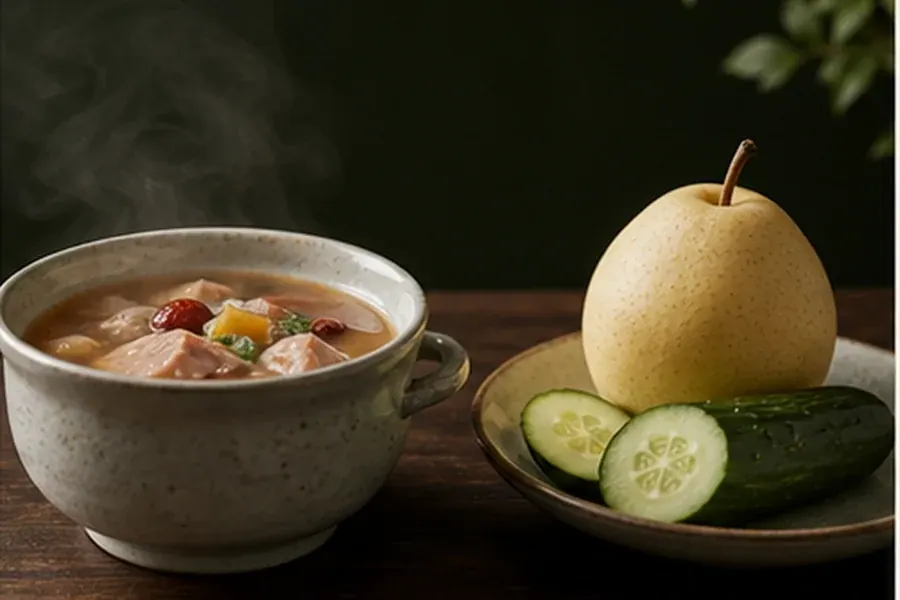
A pear is eaten poached and hot. What has changed compared to the raw pear?
Sort these six by nature
- Fresh ginger
- Lamb
- Rice
- Chinese yam
- Watermelon
- Tofu
When flavor misleads
Neither color nor flavor tells you the nature: sweet is not warm and pungent is not hot. These six have to be learned one by one.
- Walnut, red jujube
- Warm and sweet
- Sweet potato
- Sweet and neutral: sweet does not mean warm
- Shiitake mushroom
- Neutral: that is why it is in so many broths
- Daikon radish, barley
- Cool; daikon is pungent and cool at once
Another round, this time with no obvious extremes
- Walnut
- Sweet potato
- Daikon radish
- Red jujube
- Shiitake mushroom
- Barley
Someone builds their whole week out of warm and hot foods because they “feel cold”. What is wrong?

Level complete!
Little by little, the pantry fills.
Did you enjoy it? In the app you save your progress, review what you forget and unlock the 770 exercises.
Study content. The exercises describe concepts of Traditional Chinese Medicine; they are not medical advice.