External therapies: Tui na
Families of maneuver, not a list of names. 6 activities, about 12 minutes.
Two circles that are not the same
推拿 Tuī Ná
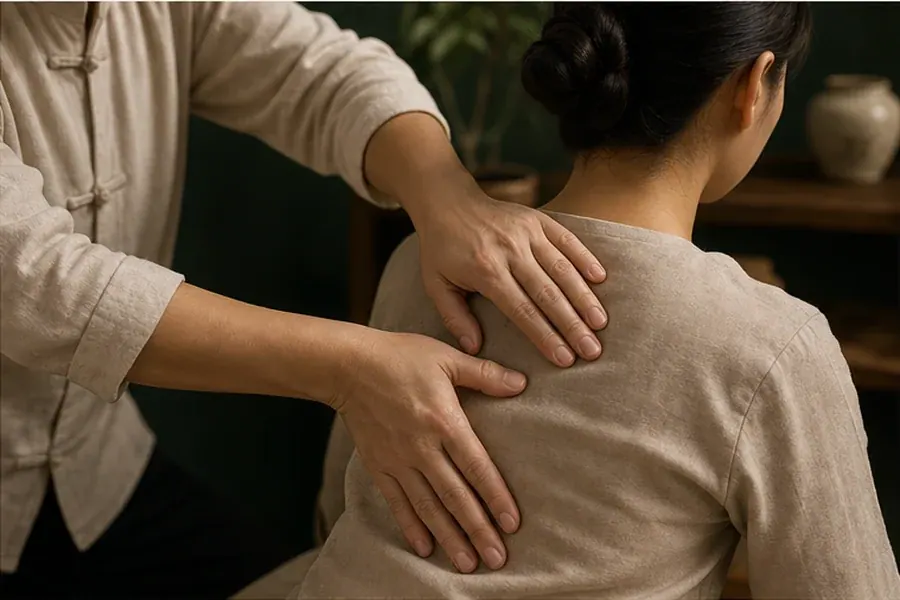
The difference between Rou Fa and Mo Fa is depth of action, and it is worth having crystal clear. In Rou Fa hand and skin move together over the deep tissue: there is no sliding between hand and skin, but displacement of the whole over the underlying planes. In Mo Fa the hand brushes the surface in circles without dragging the tissue.
- Rou Fa
- Hand and skin together over the deep plane
- Mo Fa
- Superficial circular brushing, no drag; sedating
- Mo Fa on the abdomen
- Its commonest use, precisely because it is superficial
- The hand slides over the skin
- Not bad Rou Fa: a different maneuver
Common mistake: Correcting Rou Fa by increasing pressure. If the hand slips, the problem is the grip, not the force.
The three rhythmic maneuvers
Why is the palm cupped in Pai Fa?
Working area for the rhythmic maneuvers, or forbidden area?
- The spine
- The bulk of the thigh muscle
- The kidney area
- Upper back muscle, lateral to the spine
- A bony prominence
- The gluteal mass
After three sessions in a row your thumbs hurt. What do you review first?
Put a tui na study session in order
- Initial assessment and agreement on what will be done
- Superficial maneuvers to prepare the tissue
- Deep work on the relevant plane
- Mobilizations within the available range
- Gradual closure, lowering the intensity

Level complete!
You completed the technique with sound judgment.
Did you enjoy it? In the app you save your progress, review what you forget and unlock the 723 exercises.
Study content. The exercises describe concepts of Traditional Chinese Medicine; they are not medical advice.