Dà Zǎo · Chinese Date
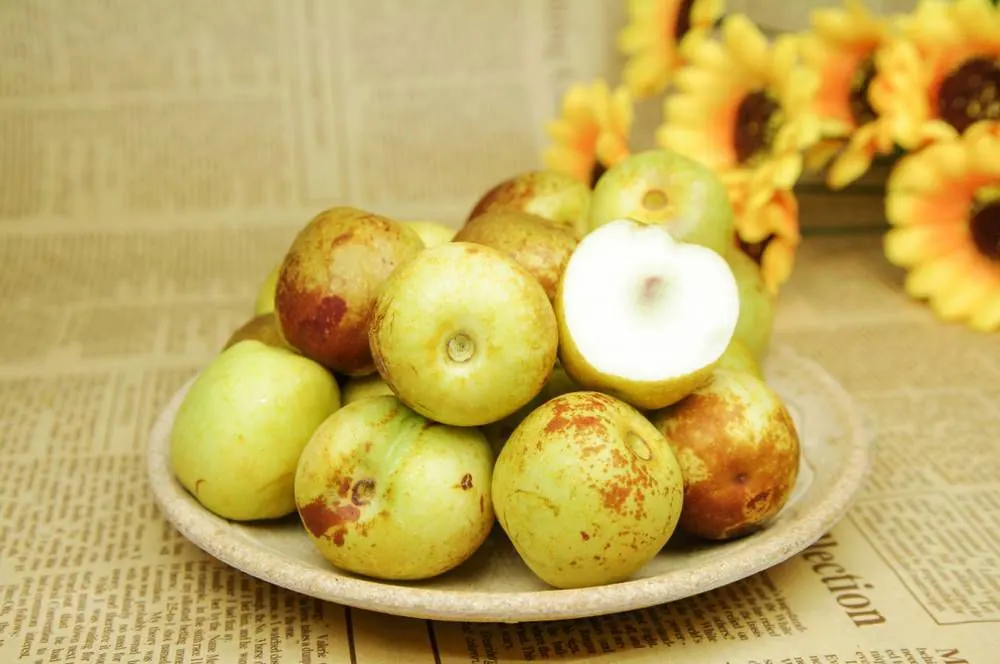
Dà Zǎo (大枣, Chinese Date) is a herb of Warm nature and Sweet flavor, in the “Qi Tonifying” category. Tradition uses it to tone the Spleen and Stomach, Nourish the blood and calm the spirit, Harmonize the other herbs in the formulas.
Energetic profile
- Pinyin name
- Dà Zǎo
- Characters
- 大枣
- Botanical name
- Ziziphus jujuba Mill.
- Family
- Rhamnaceae
- Part used
- Fruit
- Nature
- Warm
- Flavor
- Sweet
- Meridians
- Heart, Spleen, Stomach
- Category
- Qi Tonifying
- Toxicity
- Non-toxic
- Pregnancy
- No contraindication described (always consult)
- Origin
- China, Middle East
Actions according to tradition
- Tone the Spleen and Stomach
- Nourish the blood and calm the spirit
- Harmonize the other herbs in the formulas
Traditional uses
- Spleen Qi deficiency with fatigue and poor appetite
- Blood deficiency with irritability, insomnia and crying without cause (Zang Zao)
- As a guide and harmonizer in countless classic formulas
- Palpitations and anxiety due to heart blood deficiency
- Debilidad general post-enfermedad
Studied effects and current applications
- Tonifies the Qi of the Spleen and Stomach, improving digestion
- Nourishes the blood and calms the spirit in anxiety and insomnia
- Harmonizes and softens formulas preventing drastic herbs from damaging correct Qi
- Genera fluidos y humedece la sequedad
- Inmunomodulador y hepatoprotector
Applications under investigation
- Iron deficiency anemia
- Anxiety disorders
- Chronic fatigue
- Hepatoprotection
- Insomnia due to blood deficiency
An effect being investigated does not mean it has been proven in humans.
Contraindications and adverse effects
Absolute contraindications
- Excessive dampness with severe abdominal distension
- Damp-heat without deficiency
Relative contraindications
- Diabetes (high natural sugar content)
- Flatulencia excesiva
- Dental caries (high sugar content)
- Pregnancy
- Safe and nutritious during pregnancy.
- Breastfeeding
- Safe during breastfeeding.
- Children
- Excellent food-medicine for children.
- Older adults
- Excellent nourishing tonic for the elderly. Monitor blood glucose in diabetics.
Possible adverse effects
- Flatulence and excessive bloating
- Elevation of glucose in diabetics
When to stop
- intolerable abdominal distension
- Diabetes mal controlada
Interactions with medications
| Group | Drugs | Severity | Effect and recommendation |
|---|---|---|---|
| Inmunosupresores | Ciclosporina | Mild | Possible mild additive immunomodulation Generally safe use. Inform the doctor. |
With other herbs
- sheng_jiang Classic combination to harmonize Wei Qi and protect the stomach in formulas
Reference dose
- Decoction
- 3-12 dates (6-30g) daily
- Culinary use
- 3-10 dates daily as food
- Acute use
- 2-4 weeks
- Chronic use
- Continued use as safe food
- Maximum
- Long-term use as herb-food
- Children
- Safe for children. Excellent as food-medicine.
Forms of preparation
Boil 6-12 pitted dates in 4 cups of water for 30-40 min. Eat the dates and drink the liquid.
Tonifying the Spleen, calming the spirit
Add 6-10 dates to soups, congee or meat preparations. Cook 1-2 hours.
Daily use as a food tonic, to harmonize formulas
Approximate doses from the literature; they are not a prescription. Consult a professional.
Active compounds
Flavonoids (rutin, sphingosine), saponins (jujubosides) and polysaccharides
Triterpene saponins · Sedative, hepatoprotective, immunomodulatory
GABA and serotonin modulation, macrophage activation · 0.1-0.5%
Flavonoids · Antioxidant, anti-inflammatory, vascular protector
Capture free radicals, strengthen capillaries · 0.5-2.0%
Heteropolysaccharides · Immunomodulator, hepatoprotective
Activation of NK cells, reduction of hepatic oxidative stress · 5-15%
Nutrients and amino acids · Antioxidant, liver protector, blood tonic
Collagen synthesis cofactor, methyl group donor · Vitamin C: 200-500 mg/100g
Harvesting and processing
- Harvest
- Autumn (September-November), when the fruits ripen to red-brown
Fruits harvested ripe, dried in the sun or in a dryer. The large varieties (大枣) from Hebei and Shandong have the highest medicinal quality.
Ripe fruits dried in the sun. Defective ones are eliminated. They can be pitted for use in decoction.
Fried fruits over high heat until partial charring.
Formulas it appears in
Health notice. Educational and study content. It describes concepts of Traditional Chinese Medicine and does not replace diagnosis or treatment by a healthcare professional. Needling, medicinal herbs and invasive techniques must be applied by trained professionals. Safety guide.