Qigong and tai chi: movement, breathing and health
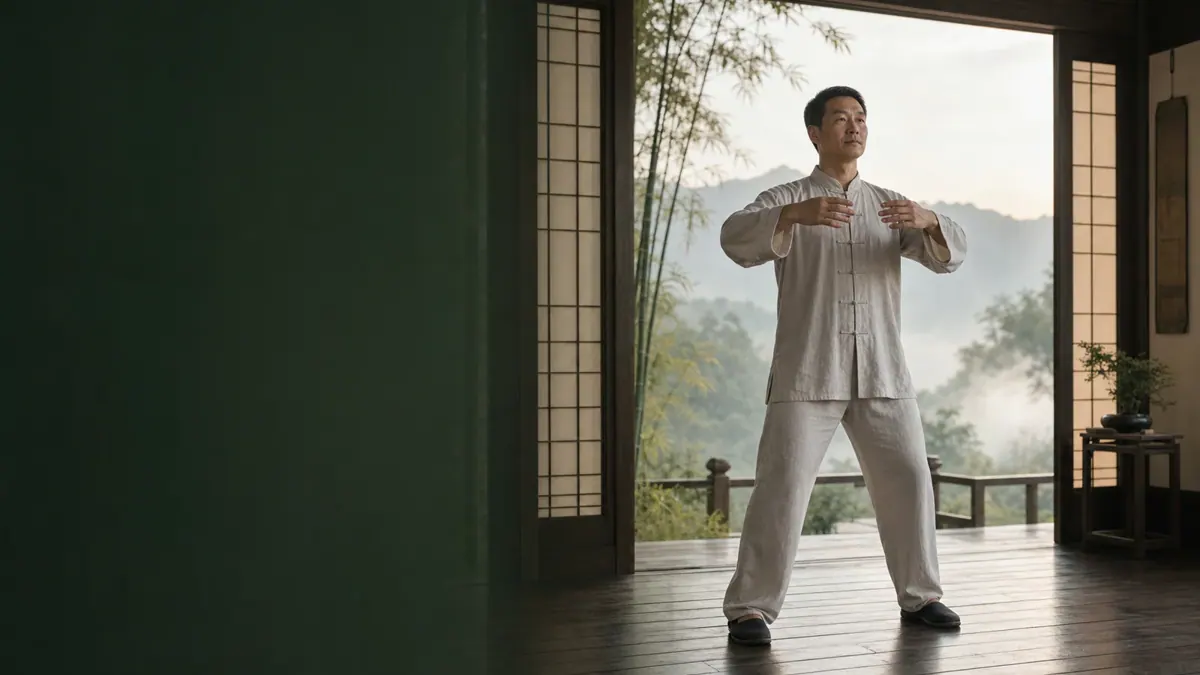
Qigong and tai chi are Chinese practices that combine slow movements, breathing and mental focus. Qigong is a set of health exercises and tai chi is a martial art practiced today mainly as gentle exercise. The evidence suggests benefits for balance and fall prevention in older adults and for general physical fitness.
Key points
- Qigong brings together movement, posture, breathing and concentration exercises aimed at cultivating Qi.
- Tai chi is an internal martial art practiced mainly as a slow, continuous sequence of movements.
- Both are low-intensity physical activities that can be adapted to almost any age.
- The most consistent evidence for tai chi concerns improved balance and fewer falls in older adults.
- There are also studies suggesting benefits for knee osteoarthritis pain, quality of life and psychological well-being.
- They are generally safe practices, but they should be adapted to each person's limitations.
Qigong and tai chi are probably the Chinese medicine practices most visible in everyday life: just take a walk through a park in any Chinese city early in the morning and you will find groups moving slowly and in silence. Both combine movement, breathing and mental focus, and unlike other therapies they do not require anyone to act on our body: the person practices on their own. On this page we explain what each one is, how they differ, how to get started and what the research says.
What is qigong?
Qigong (气功, qìgōng) roughly means "work" or "cultivation of Qi". This name covers a great many exercises with a common goal: according to tradition, to cultivate, circulate and balance Qi (气, qì), one of the vital substances of Chinese medicine. Some are practiced standing and moving, others sitting or lying down and almost motionless.
Among the most widespread styles are:
- Baduanjin (八段锦, bāduànjǐn), the "eight brocades", a short series of eight exercises.
- Wuqinxi (五禽戏, wǔqínxì), the "five animals play", which imitates the movements of the tiger, deer, bear, monkey and crane.
- Yijinjing (易筋经, yìjīnjīng), exercises to "transform the tendons".
What is tai chi?
Tai chi or taijiquan (太极拳, tàijíquán) is an "internal" martial art whose name refers to taiji, the supreme principle from which yin and yang arise. It is practiced as a sequence, or "form", of slow, continuous, linked movements in which weight shifts from one leg to the other. There are several traditional styles, such as Chen and Yang, and simplified forms designed for beginners.
Differences and common ground
| Aspect | Qigong | Tai chi |
|---|---|---|
| Origin | Health, meditation and longevity practices | Martial art |
| Structure | Short exercises that are repeated | Long choreographed sequences |
| Initial difficulty | Generally low | Somewhat higher, because the form must be memorized |
| Posture | Standing, sitting or lying down | Standing and moving |
| Common elements | Slowness, relaxation, breathing, attention | Slowness, relaxation, breathing, attention |
How to start practicing?
- Look for a qualified instructor or a group, at least at first, to learn correct posture.
- Start with short sessions and increase gradually.
- Wear comfortable clothing and flat, stable shoes.
- Prioritize regularity: several weekly sessions are more useful than an occasional long session.
- Adapt the movements to your physical condition; they can even be practiced seated.
What does the scientific evidence say?
Unlike other Chinese medicine techniques, tai chi and qigong have often been studied as a form of physical exercise, which makes the results easier to interpret. Even so, many studies are small and it is impossible to "blind" the participants.
With due caution:
- Balance and falls. This is the area with the most consistent evidence. Systematic reviews suggest that tai chi improves balance and reduces the risk of falls in community-dwelling older adults.
- Knee osteoarthritis and chronic pain. Several trials suggest improvements in pain and function in knee osteoarthritis, and it has also been studied in fibromyalgia and low back pain, with promising but inconclusive results.
- Cardiovascular and respiratory health. Some studies suggest improvements in physical capacity and quality of life in people with chronic heart or lung disease, as a complement to their treatment.
- Psychological well-being. There are data suggesting favorable effects on anxiety, mood and sleep quality, although the quality of the evidence varies.
The most plausible mechanisms are well known: physical activity, leg strength training, postural control, slow breathing and sustained attention. It has not been shown that they work through Qi understood as a physical energy. More details in scientific evidence.
Safety and precautions
Qigong and tai chi are, in general, very safe activities. The adverse effects described are mostly mild: muscle soreness or discomfort in the knees and back, especially if low stances are held or the technique is forced. To practice safely:
- Consult your doctor before starting if you have heart disease, serious balance problems, advanced osteoporosis, joint replacements or recent surgery.
- Do not bend your knees more than is comfortable or let them go past the tips of your toes.
- If you are at risk of falling, practice near a stable support or start with seated exercises.
- Stop practicing if you experience dizziness, chest pain or shortness of breath.
- Be wary of anyone who presents these practices as a substitute for medical treatment or promises to cure serious diseases.
See also our general safety guide and discover other therapies such as acupuncture.
Frequently asked questions
What is the difference between qigong and tai chi?
Qigong is a broad category of health exercises, often short and repetitive, that combine movement, breathing and attention. Tai chi, or taijiquan, is a martial art with long, choreographed forms or sequences based on the theory of yin and yang. Many consider tai chi a form of qigong in motion; in practice both share principles of slowness, relaxation and concentration.
Is tai chi good for older adults?
Yes, it is one of the most studied activities in older adults. The evidence suggests that regular tai chi practice improves balance and reduces the risk of falls, while also supporting mobility and confidence in moving. It is important to start with an instructor who adapts the movements, for example by reducing knee bending, and to consult your doctor if you have significant health problems.
How much do you need to practice to notice benefits?
Studies usually use programs of two or three weekly sessions of 30 to 60 minutes over several months. As with any exercise, regularity matters more than intensity. Many people soon notice a feeling of relaxation, while changes in balance or physical fitness require practice sustained over time.
Do you have to believe in Qi to practice qigong or tai chi?
No. The benefits observed in studies can be explained, at least in part, by known mechanisms: physical activity, strength and balance training, slow breathing and mindfulness. The concept of Qi is part of the traditional framework that gives meaning to the practice, but anyone can practice it as gentle exercise regardless of their beliefs.
Health notice. This content is educational and describes concepts of Traditional Chinese Medicine together with the available scientific evidence. It does not replace diagnosis or treatment by a healthcare professional. If symptoms are persistent or severe, consult your doctor. Safety guide.