Gua sha: the therapeutic scraping of Chinese medicine
Gua sha is a traditional Chinese medicine technique that consists of scraping lubricated skin with a smooth-edged tool until small reddish marks called sha appear. Traditionally it is used to move Qi and Blood and relieve muscle pain; the scientific evidence is scarce and comes from small studies.
Key points
- Gua means to scrape and sha refers to the small reddish spots that appear on the skin.
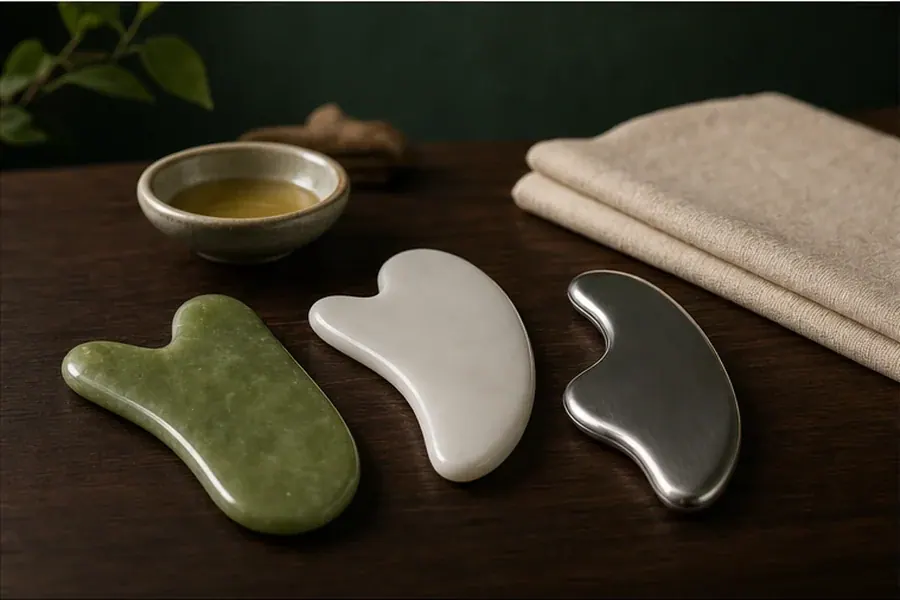
- It is performed with a blunt-edged tool, such as jade, horn, ceramic or a spoon, on oiled skin.
- The marks are small leakages of blood under the skin and usually disappear within a few days.
- Cosmetic facial gua sha is much gentler and does not produce sha.
- The evidence on its effectiveness for pain comes from small trials and is limited.
Gua sha (刮痧, guā shā) is one of the simplest and most popular manual techniques of traditional Chinese medicine. Its name combines gua, to scrape, and sha, the term used for the reddish spots that appear on the skin after treatment. For centuries it was practiced in Chinese and Southeast Asian homes as a household remedy, and in recent years it has become popular in the West, especially in its facial version. On this page we explain how it is done, what it means in the tradition, what risks it has and what science says.
What is gua sha?
The technique consists of applying an oil or balm to the skin and scraping with a smooth-edged tool, with repeated strokes in the same direction, until small petechiae appear. Traditionally it is applied to the back, neck, shoulders and limbs, following the course of the meridians.
What does "sha" mean in the tradition?
In Chinese medicine, the appearance of sha is interpreted as the release to the surface of stagnant Qi (气, qì) and Blood (血, xuè), or of retained "heat". According to tradition, its color and intensity provide information about the patient's condition. From the standpoint of Western physiology, the marks are caused by the breaking of small capillaries and the leakage of blood under the skin, similar to a mild bruise.
How is a session performed?
- Oil, cream or balm is applied to the area to be treated.
- The practitioner holds the tool at a low angle and makes firm, short strokes, always in the same direction.
- They continue until sha appears or until the skin reddens evenly.
- The session usually lasts between 10 and 20 minutes, and it is recommended to keep the area covered and warm and to drink water afterwards.
The marks normally disappear within a few days. The same area is not treated again until they have faded.
Tools and variants
| Aspect | Therapeutic gua sha | Facial gua sha |
|---|---|---|
| Area | Back, neck, shoulders, limbs | Face and neck |
| Pressure | Firm | Very gentle |
| Goal | Relieve pain and stiffness; according to tradition, move Qi and Blood | Relaxation and a temporary cosmetic effect |
| Marks | Yes, sha appears | Should not appear |
| Tools | Horn, jade, ceramic, soup spoon, coin | Flat jade or quartz stones |
Gua sha is often combined with other techniques such as cupping or tuina, with which it shares a traditional goal.
What is gua sha used for?
In the tradition it is used mainly for:
- Pain and stiffness in the neck, shoulders and back.
- Muscle discomfort after exertion.
- Early stages of colds or heatstroke, interpreted as external factors according to the causes of disease in Chinese medicine.
- Tension headaches.
In its facial version, it is promoted to reduce puffiness, "tone" the skin or relax the facial muscles.
What does the scientific evidence say?
Gua sha has been little researched. The available studies are mostly small, often without an adequate placebo group and with short follow-up.
- Musculoskeletal pain. Some small trials suggest that gua sha might relieve neck or low back pain in the short term compared with no treatment or with other simple treatments, such as applying heat. The quality of the evidence is low and the results need to be confirmed by larger studies.
- Mechanism. An increase in local blood flow has been observed in the treated area, but it is not clear how this relates to pain relief.
- Facial gua sha. There is no solid evidence that it has anti-aging or lasting effects.
- "Detoxification". There is no evidence that gua sha removes toxins.
In short, gua sha may feel pleasant for some muscle discomfort, but its effectiveness has not been demonstrated. More information in scientific evidence.
Safety and precautions
Gua sha is a low-risk technique when applied correctly, but it is not free of adverse effects:
- Discomfort or pain during and after the session.
- More extensive bruising than expected.
- Abrasions or wounds if scraping is too forceful or done with an uneven-edged tool, with a risk of infection.
- Transmission of infections if the tool is not cleaned and disinfected between people.
It is best to avoid it or consult your doctor first in the case of:
- Treatment with anticoagulants or antiplatelet drugs, or clotting disorders.
- Damaged skin, wounds, inflamed acne, eczema, sunburn or varicose veins in the area.
- Capillary fragility, as occurs in many older people or in those who take corticosteroids for a long time.
- Pregnancy, on the abdominal and lower back area.
One last practical warning: gua sha marks can be mistaken for injuries caused by abuse, especially in children. If it is applied to a minor, it is a good idea to inform the pediatrician. You will find more recommendations in safety.
Frequently asked questions
Is it normal for gua sha to leave marks?
In traditional therapeutic gua sha, yes: the goal is for small red or purplish spots, called sha, to appear, caused by broken capillaries under the skin. They usually disappear within a few days. There should be no wounds, blisters or severe pain. In cosmetic facial gua sha, on the other hand, the pressure is very light and it should not leave marks.
Does facial gua sha reduce wrinkles?
There is no solid scientific evidence that facial gua sha reduces wrinkles or has lasting effects on the skin. It can produce a pleasant sensation and a temporary reduction in puffiness through surface drainage, similar to a massage. It is wise to be wary of promises such as rejuvenation or detoxification and to use the tool clean and gently.
Who should not have gua sha?
People who take anticoagulants or have clotting disorders, those with damaged skin, skin infections, varicose veins or sunburn in the area, and people with capillary fragility should avoid it or consult their doctor first. During pregnancy it is best to avoid the abdomen and lower back, and in children it should only be done with very gentle techniques.
Health notice. This content is educational and describes concepts of Traditional Chinese Medicine together with the available scientific evidence. It does not replace diagnosis or treatment by a healthcare professional. If symptoms are persistent or severe, consult your doctor. Safety guide.