Qigong: Animals and sinews
A quality of movement, not mimicry. 6 activities, about 11 minutes.
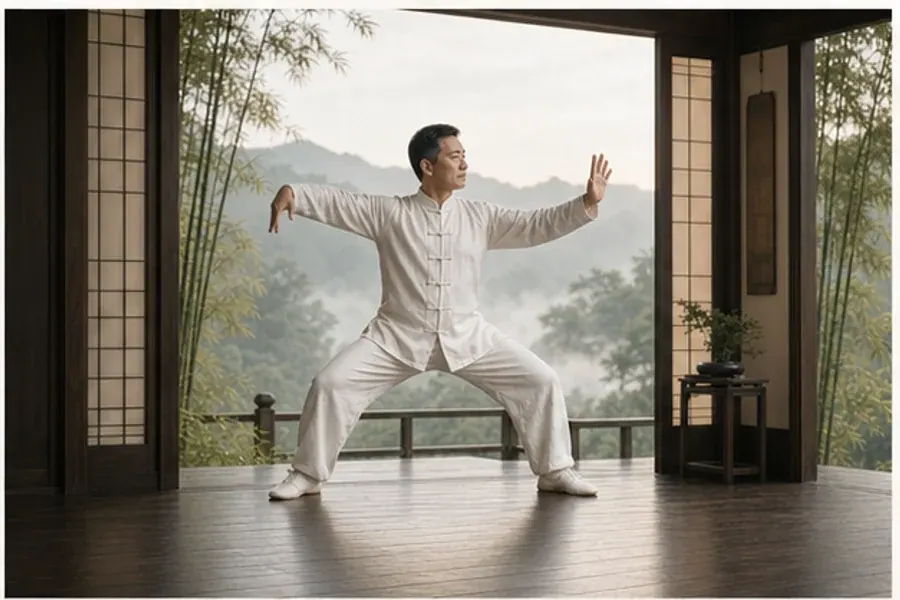
Five qualities, five animals
五禽戏 Wǔ Qín Xì
Each animal brings a different quality of movement, and that quality is what is practiced: the imitation is the teaching structure that makes it memorable, not the aim. Correspondences with emotions and elements vary across lineages.
- Tiger
- Stability and reach, without locking joints
- Deer
- Gentle trunk turning and small steps
- Bear
- Weight and center
- Monkey
- Attention and agility
- Bird
- Expansion and balance
Common mistake: Turning the tiger into maximal finger and shoulder tension. The claw is relaxed; the firmness is in the base, not in the hand.
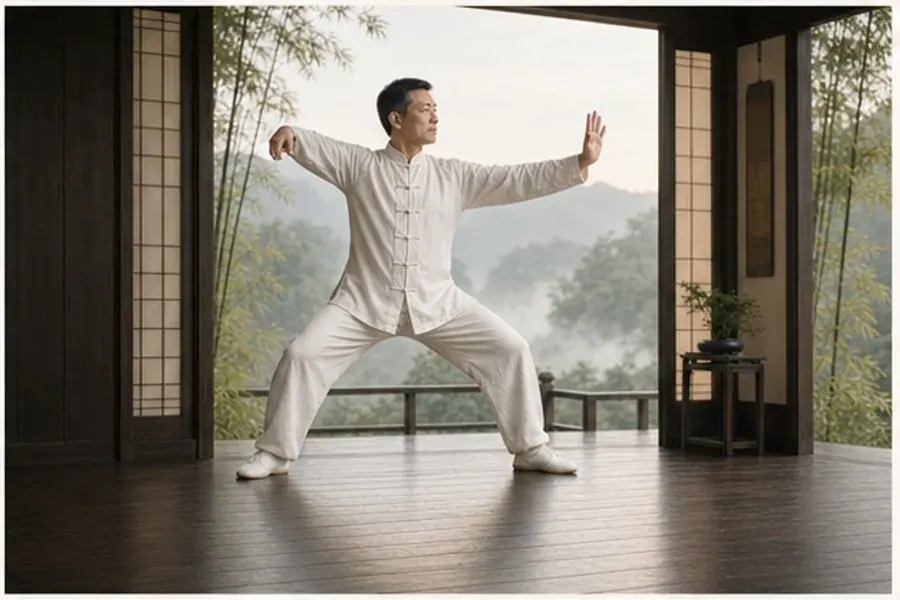
Twelve forms of soft strength
易筋经 Yì Jīn Jīng
The Yi Jin Jing works coordination and sustained strength without maximal tension. Its historical narrative is popularly linked to Bodhidharma, and it is worth knowing that this attribution is part of a complex and disputed tradition, not an established fact.
- Twelve forms
- Coordination and soft strength, not gym repetitions
- Vividly named
- “Pull nine cows by their tails”, “three plates fall to earth”
- The Bodhidharma attribution
- A disputed tradition, not settled history
- Sustained strength
- It is held, not squeezed to maximum
A student does the monkey with a lot of facial expression and very little base. What do you correct?
Which routine does each name belong to?
- Draw the bow left and right
- Bear: weight and center
- Three plates fall to earth
- Sway the head and tail
- Bird: expansion and balance
- Green dragon extends a claw
Each animal with the quality being practised
“Sustained soft strength” in the Yi Jin Jing. What does it mean in practice?

Level complete!
We finish as we started: unhurried.
Did you enjoy it? In the app you save your progress, review what you forget and unlock the 723 exercises.
Study content. The exercises describe concepts of Traditional Chinese Medicine; they are not medical advice.