Exercises · Chinese dietetics · Lesson
Chinese dietetics: What cooking does
It shifts a lot; it rewrites little. 5 activities, about 11 minutes.
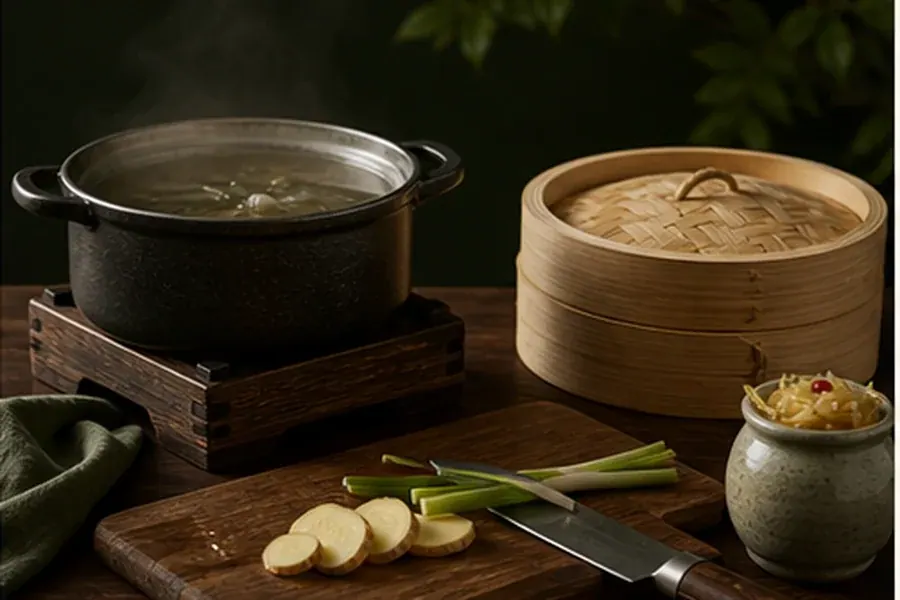
Wet and dry
Water methods — congee, steaming, blanching, stewing — soften, extend and make hard-to-digest things more tolerable. Dry ones — oven, toasting, stir-frying — concentrate aroma, remove water, and tradition describes them as more warming.
- A two-hour congee
- The most in softness and tolerance
- Steaming
- Keeps shape and water; the most neutral of all
- Short, fierce stir-fry
- Concentrates, and is described as more warming
- Toasting
- Removes water and lifts aroma; shifts upward on the scale
Common mistake: Thinking a long method “changes” the food. It makes it easier to take, which is not the same thing.
Sort the methods
- Congee
- Steaming
- Blanching
- Oven
- Toasting
- Stir-frying
Put the making of a congee in order
- Rinse the rice until the water runs almost clear
- Add eight to ten parts water to one of rice
- Bring to a boil and drop straight to the lowest heat
- Cook for a good hour, stirring now and then
- Take it off when the grain has broken down and the surface glosses
Salad does not sit well with someone who still wants to eat fresh vegetables. What do you adjust first?
What sets fermented foods apart from the other preparations?

Level complete!
Little by little, the pantry fills.
Did you enjoy it? In the app you save your progress, review what you forget and unlock the 723 exercises.
Study content. The exercises describe concepts of Traditional Chinese Medicine; they are not medical advice.